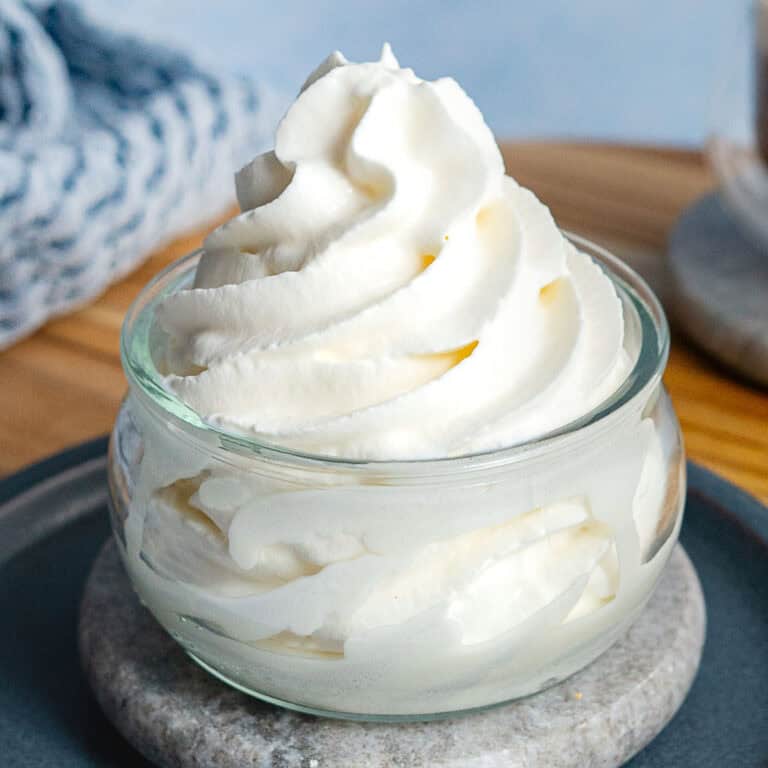

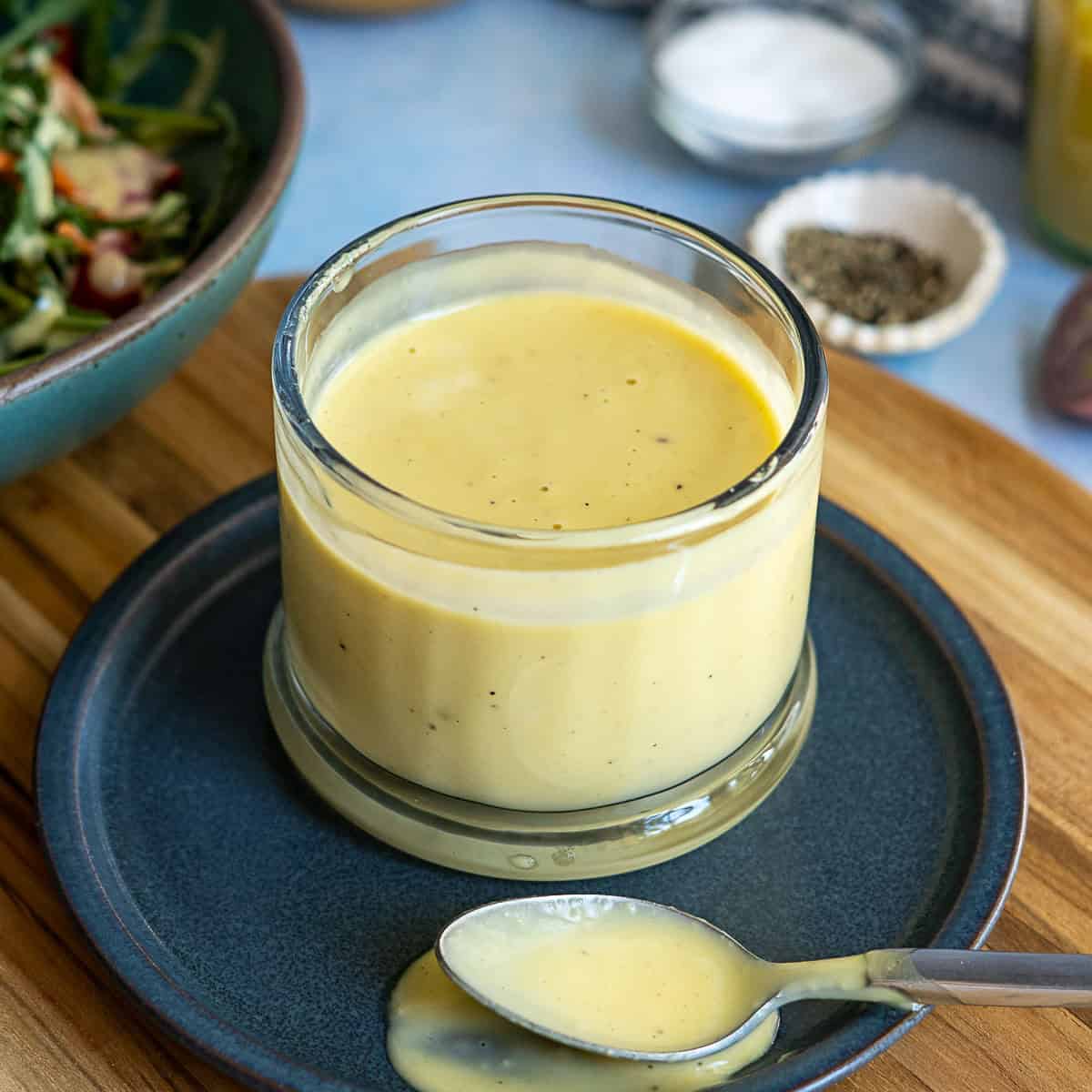
This easy dijon mustard vinaigrette recipe is creamy, tangy, and perfect for salads that could use a bold pop of flavor! It’s perfectly smooth and velvety thanks to dijon mustard, no dairy or mayo needed! Honey and olive oil help to round out the flavor profile and keep the acidity in check, while fresh shallot + garlic pump up the taste.
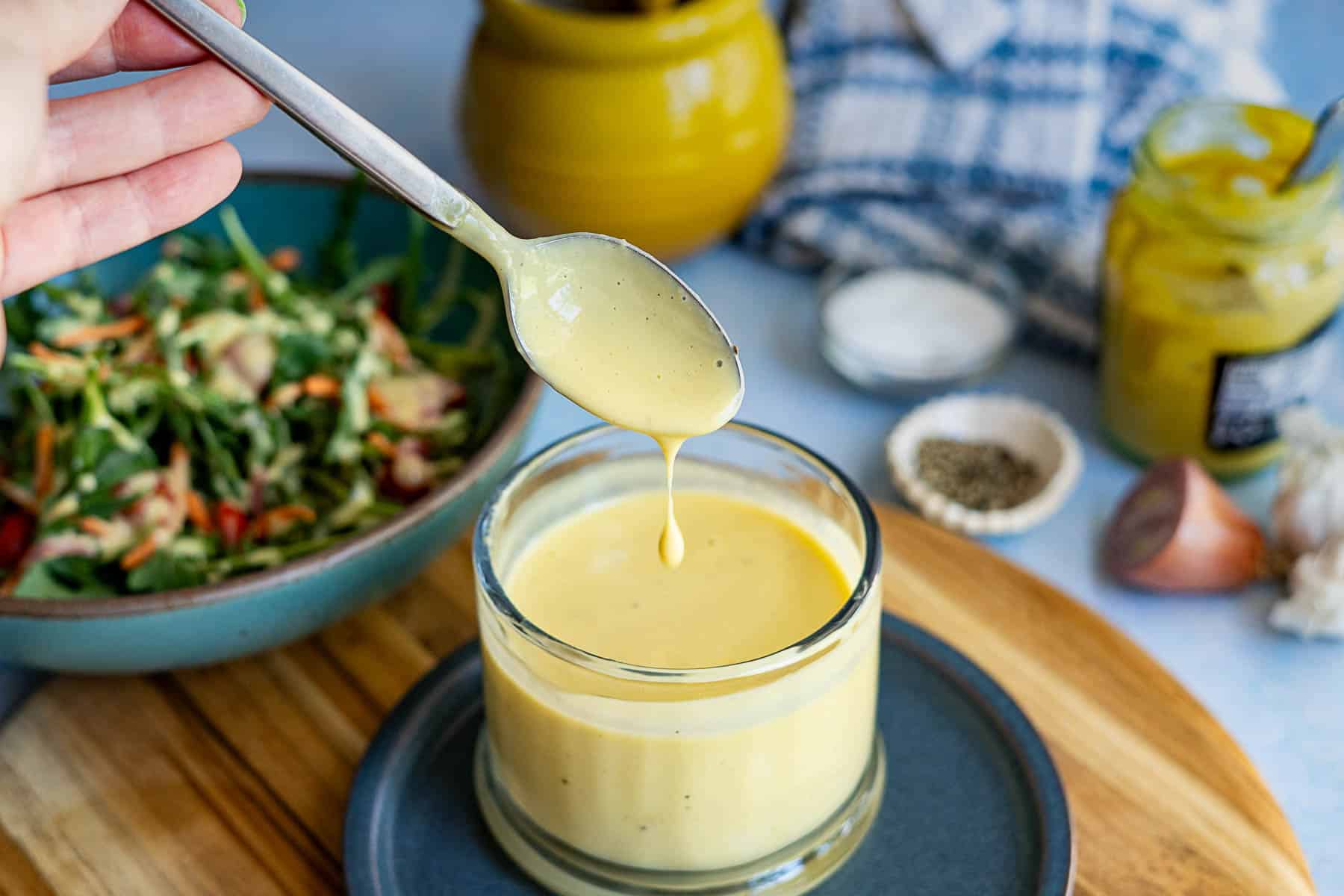
Bottled dressing is made using boring bland blends of canola oil, and it’s stuffed with tons of extra ingredients to preserve flavor for an extra long time (everyone knows about that rogue salad dressing bottle with the vnow-vintage label on it in your parent’s fridge door 🫣). THIS dressing is made using quality ingredients for fresh flavor that improves anything it touches.
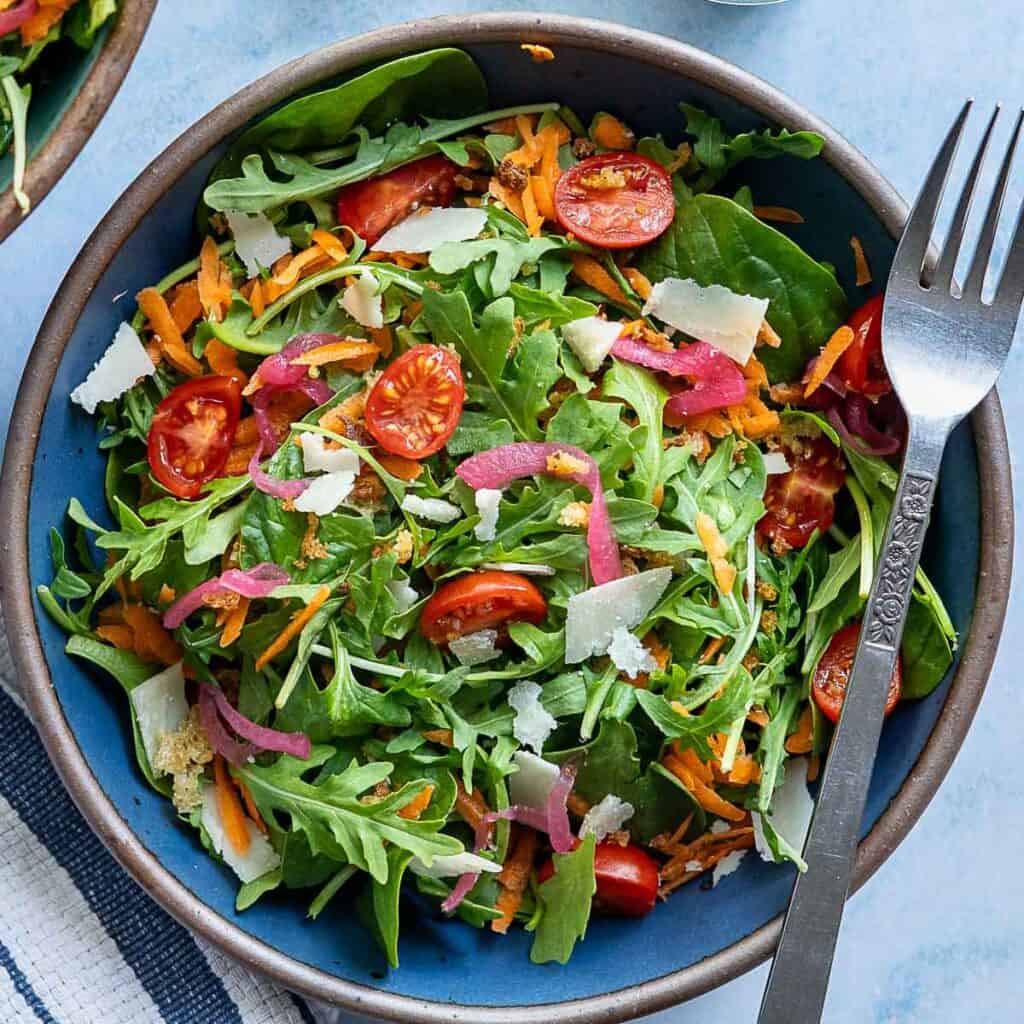
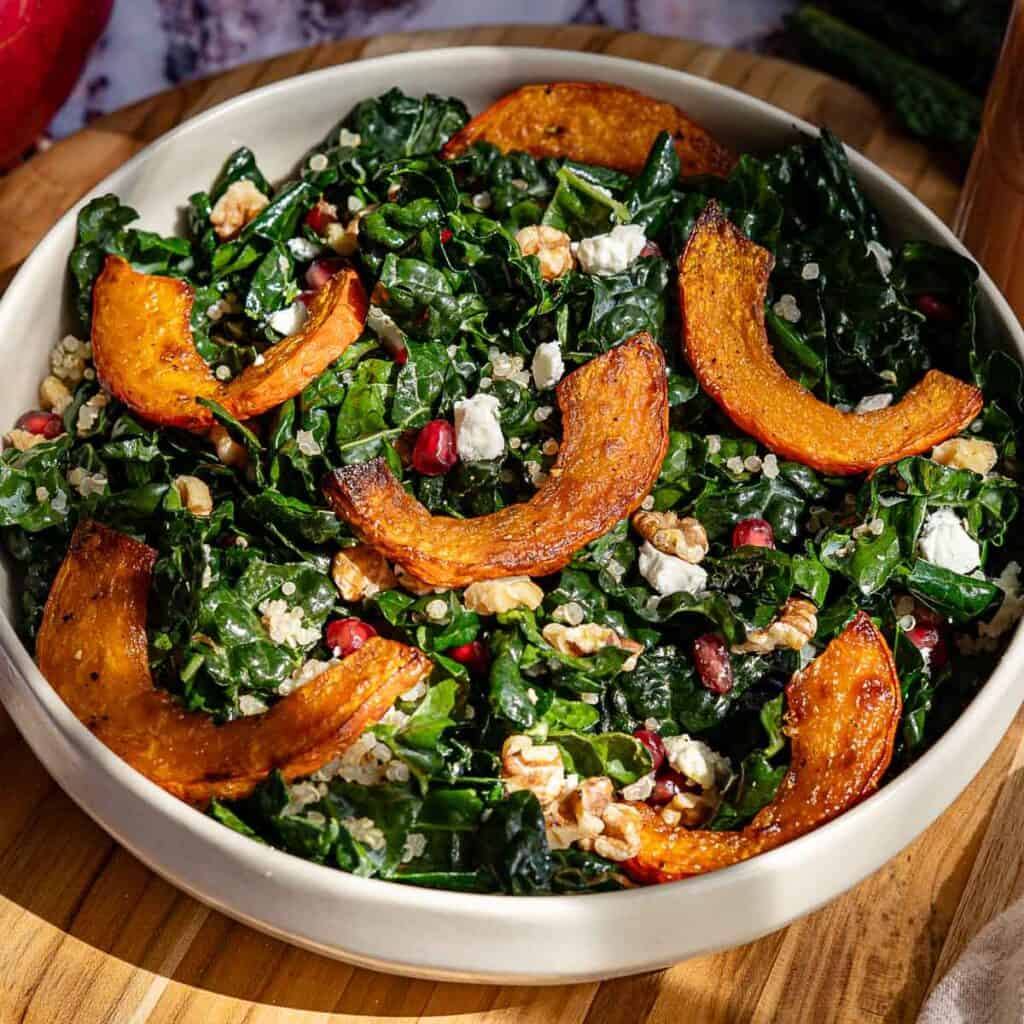
Use it on salads (obvi) or on other dishes like grain bowls, drizzled over roasted veggies like garlic broccolini, to dress up pasta salad, as a sandwich spread, and my all time favorite: as a marinade!
👀 the secret sauce…
✨ the flavor: This recipe is all about The Pop Flavor Factor thanks to tangy mustard + acidic white wine vinegar. The Balancing Act also plays a role with honey, salt, and olive oil bringing everything into balance!
🎯 the method: It’s as easy as chopping fresh ingredients, then blending the base and adding olive oil. Seriously, it comes together in 5-10 minutes!
🏆 the win: You get flavorful homemade dressing that knocks the socks off any sad shelf-stable bottle of salad dressing.
what are The Flavor Factors?
The Flavor Factor Framework is my lil set of “flavor guideposts” for cooking with confidence! Less following recipes to a tee, more trusting your instincts, getting creative in the kitchen, and becoming a more intuitive cook! 👩🏻🍳
📚the backstory of developing this dressing
(aka everyone’s favorite part of food blogs!)
This recipe is inspired by a dressing I had on a brussels sprouts salad at Summerhouse on the Lake at Disney Springs. I became pretty obsessed with it honestly. I even emailed them asking for the recipe (something you can totally do at Disney World, FYI!), but they weren’t able to share it since it’s scaled up to a commercial kitchen quantity. 😪
After scaling a few recipes down from large quantities (like my copycat Les Halles bacon cheese rolls and nostalgic school lunch pizza) I know that scaling a recipe not always as simple as just cutting the quantity in half four times. The restaurant DID share a similar recipe from another restaurant of theirs, but it included cava wine that had been cooked down. I wasn’t in the mood to open a bottle of bubbly to cook with, so I got to work on this variation! 🤠
My goal with this dressing was to create a restaurant-worthy condiment that was also so versatile it could be used in several different ways. I wanted something that was flexible enough to be used on a simple side salad, but complex enough to add brightness to otherwise dull ingredients. Ultimately, I wanted to make a vinaigrette that did more than just sit on salad leaves, and instead really wakes up the flavors of a dish!
I tested this recipe several times using different variations of ingredients including lemon juice, different types of vinegar, and blends of both citrus juice + vinegars. Lemon was nice in the dressing, but it was just a bit too tart when combined with vinegar, and the flavor wasn’t complex enough with just lemon juice on its own. Ultimately, I found that white wine vinegar was the best for highlighting the mustard flavor without overpowering it or being too acidic.
🛒 ingredients needed
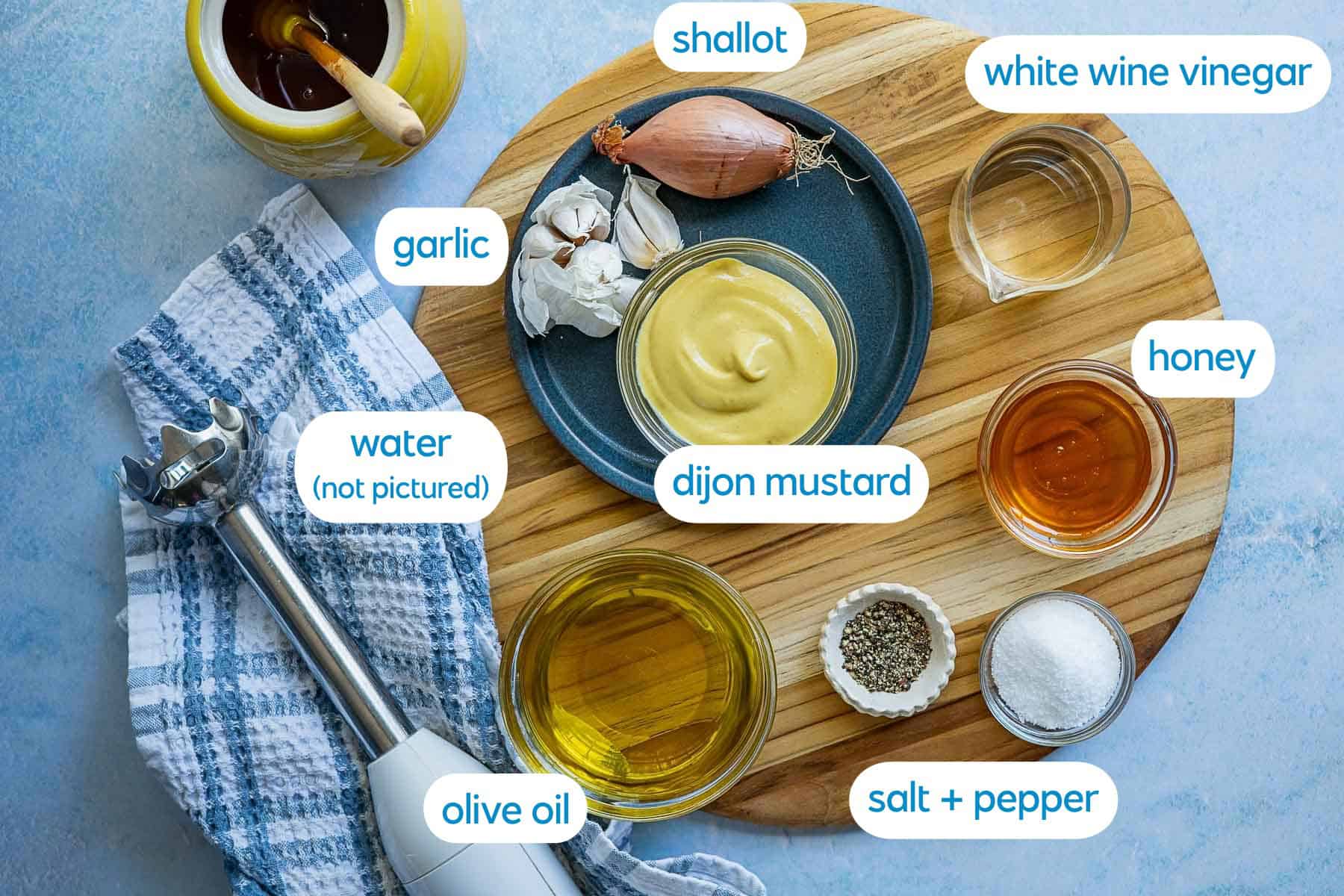
See the recipe card for the exact quantities.
🍳 how to make dijon mustard dressing
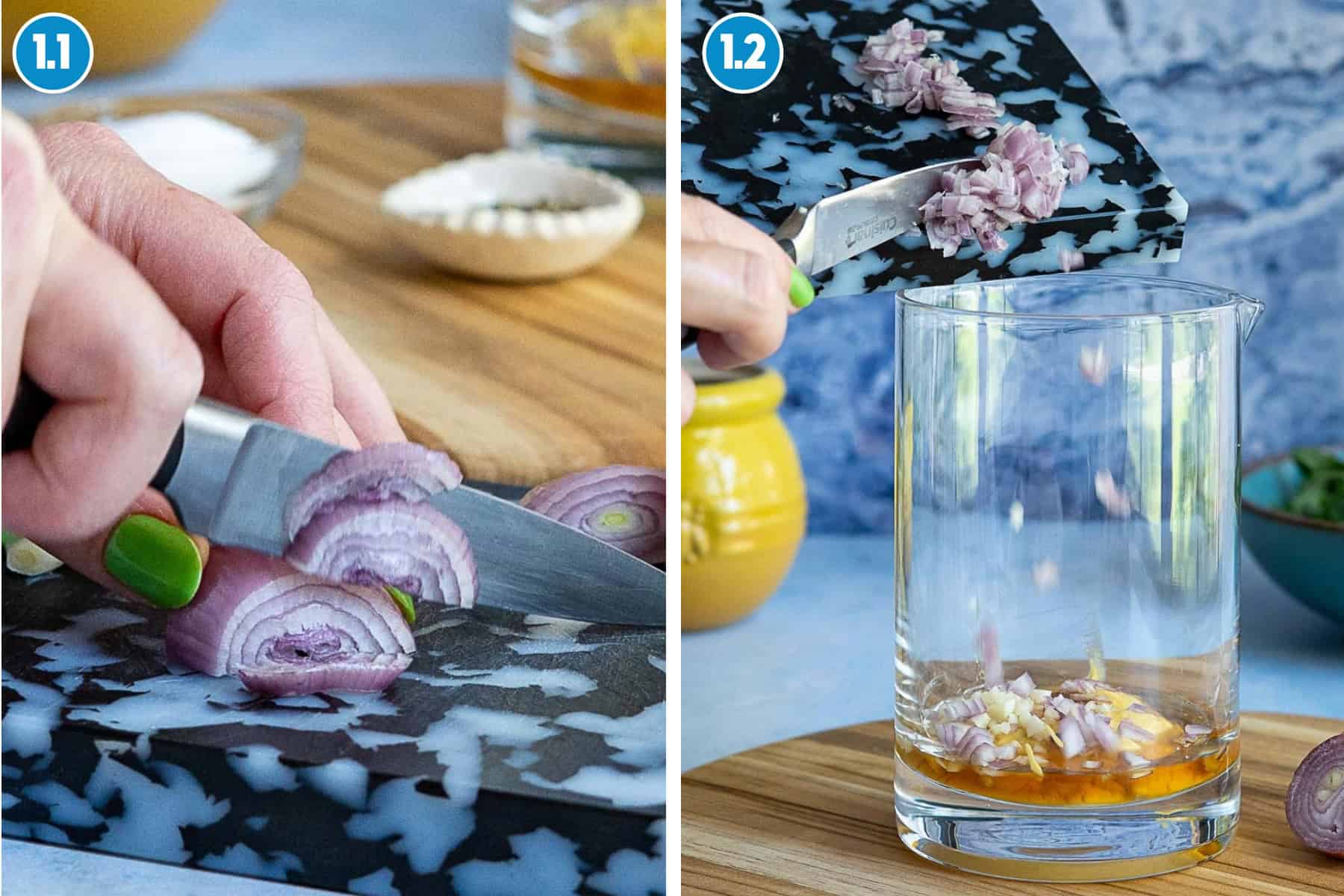
1: Prep your shallot + garlic by giving it a rough chop, then add all base ingredients to a mixing jar.
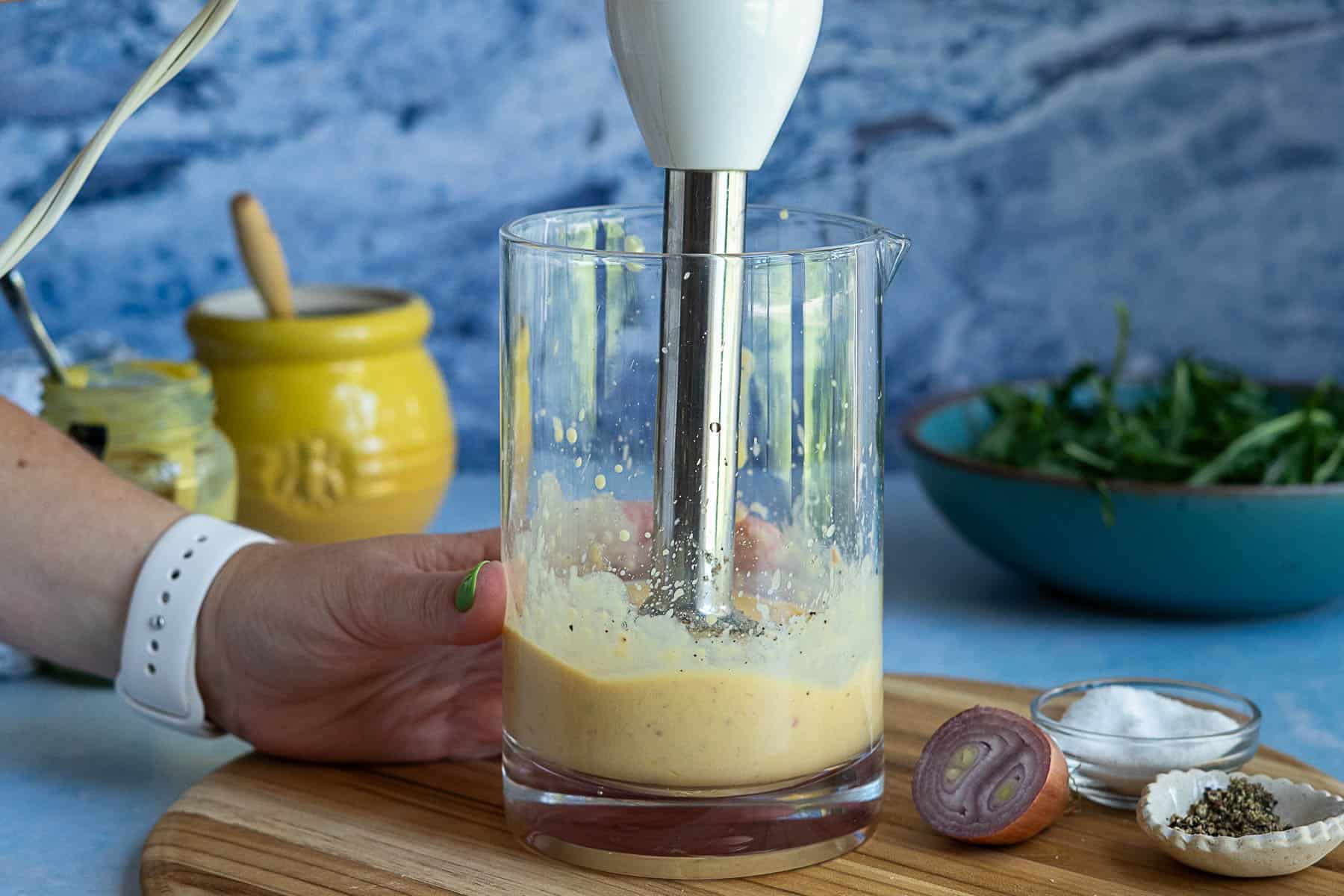
2: Combine all of the ingredients but the oil, and blend well using an immersion blender.
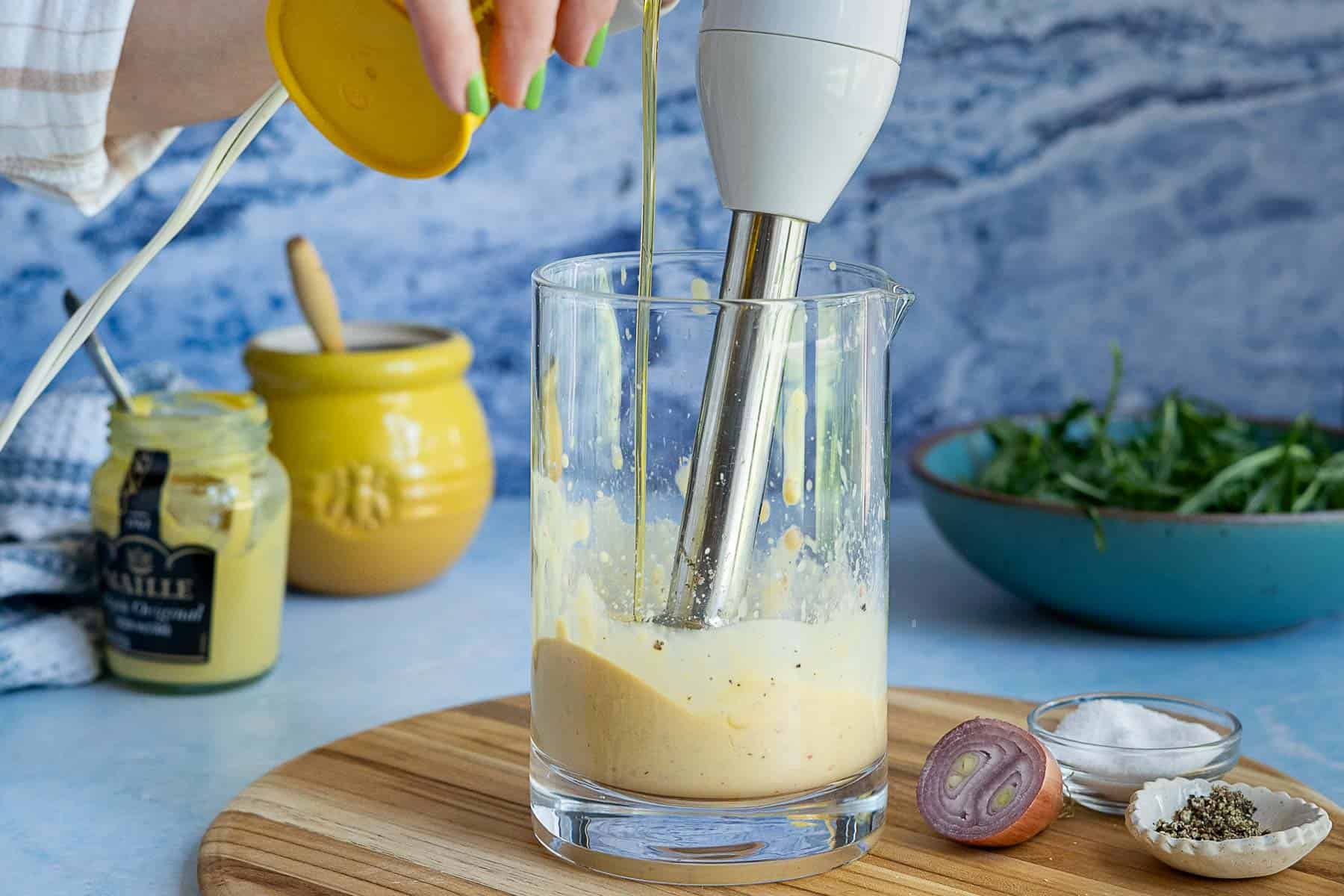
3: Slowly stream in the olive oil, blending until your vinaigrette gets thickened, smooth, and glossy.
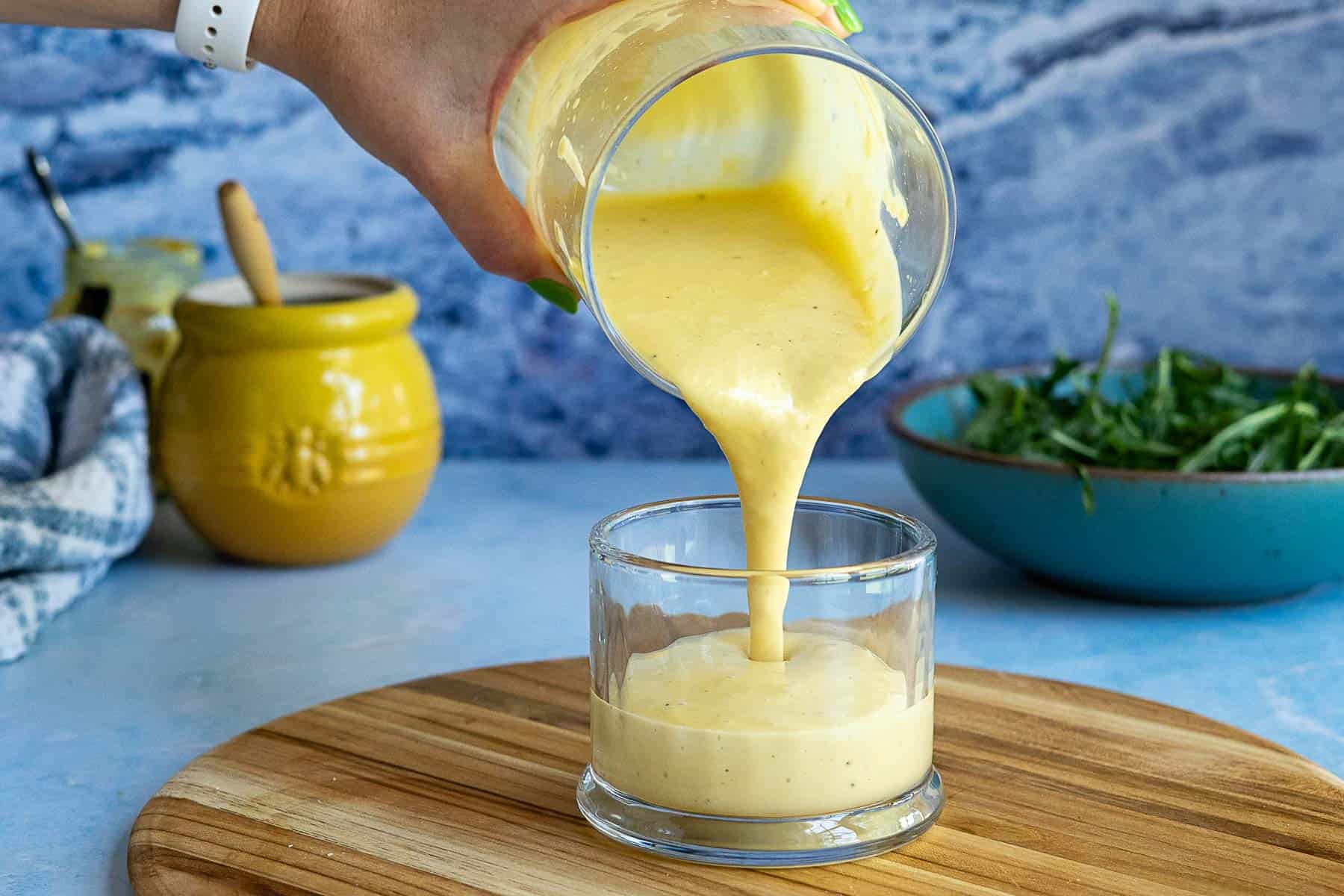
4: Store your finished dressing in an airtight storage container in the fridge for up to 14 days.
💡tips & tricks for getting it right
ℹ️ troubleshooting tips
Taste and adjust your dressing to perfect the flavor to match your preferences, and when in doubt, let your dressing rest for 30-60 minutes in the fridge before making too many changes. As the dressing sits, the flavors will meld together and mellow out.
- too tart – if your dressing tastes too sharp, add more honey, a pinch more salt or a little more water and olive oil.
- too thick – add more water about 1 TBSP at a time to help thin your dressing out if it’s too thick. It will also thicken a bit in the fridge, and if your olive oil is really good quality, it may solidify! If this happens, be sure to set your dressing out for 20-30 minutes before using it, or run it under warm water. Then shake the bottle or jar of dressing to reincorporate all of the ingredients before serving.
- too thin – if your dressing is too thin, you can add more oil 1-2 TBSP at a time until it thickens up.
- blend well – make sure to blend the base of ingredients well, and then slowly stream the oil in so everything gets emulsified (totally and completely combined into a smooth consistency). This way, there aren’t “spikes” of flavor studded throughout the dressing, but rather it’s a fully formed flavor of its own.
🍽️ how to serve your salad dressing
- dressing – use this dressing on salads like simple side salads or main dish salads too! It also works really well on grain bowls + pasta salad, too!
- marinade – for a boost of flavor, you can marinate your favorite protein for 30 – 60 minutes (or even overnight for really tough cuts of meat) then cook as desired. This would work great on grilled chicken or oven roasted salmon!
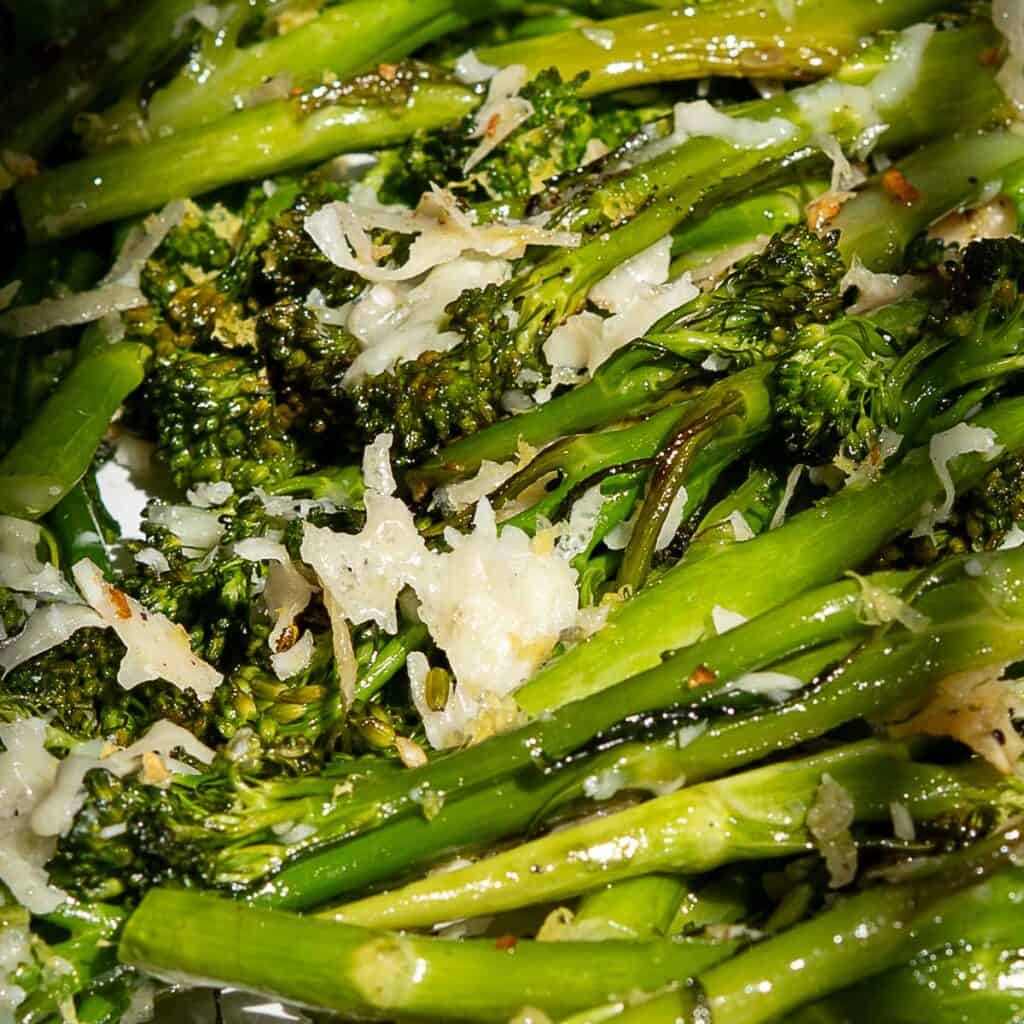
- sauce – toss roasted veggies in a few tablespoons of this dressing for a bright finishing sauce! It is perfect on parmesan potatoes, roasted broccolini, and more!
👀 looking for more?

Wanna save this recipe for later? 📬
♻️ customize your mustard dressing
- swap the vinegar – I am the kind of person who has countless bottles of vinegar varieties floating around the pantry. 😅 You can use white balsamic vinegar, champagne vinegar, or even red wine vinegar if you have that. But PLEASE promise me you will not use distilled white vinegar. I really only use distilled white vinegar for cleaning produce + select things around the house. It’s just too harsh in flavor. If you only have that on hand, dilute it by about 50% before using it to help cut the sharp favor.
- whole grain mustard – for a more bold + rustic dressing you can also use whole grain mustard. It’ll be spicier in flavor, so you may want to add more honey, but it makes an excellent alternative to this dressing!
- use another oil – most storebought dressings are made using soybean or canola oil, so you can swap the olive oil for one of those oils, or you can use another oil like avocado oil, too. Just make sure that the oil you choose isn’t too bold or robust in flavor, because then it’ll overpower the other flavors.
🧰 equipment needed & storage tips
🫙 how to store mustard vinaigrette
Your finished dressing will keep for up to two weeks in the fridge. You can also portion and freeze it for longer term storage, though it may not freeze solid due to the fat content from the olive oil.
If you make this recipe, please leave a review in the comments and a star rating!
⭐️⭐️⭐️⭐️⭐️
I read every single comment, and each rating is helpful to other readers, too! 🥹
I also love connecting on social media, so snap a pic and hashtag it #myrecipeforfun and tag me on YouTube, TikTok, Threads, or pin this recipe on Pinterest!
Dijon Mustard Vinaigrette Recipe

Wanna save this recipe for later? 📬
Equipment
- 1 immersion blender or food processor
- 1 knife & cutting board
- 1 blending jar
- 1 kitchen scale or measuring cups
Ingredients
- 45 g dijon mustard 3 TBSP
- 19 g honey 1 TBSP
- 42 g white wine vinegar 3 TBSP
- 10 g shallot 1 TBSP, roughly chopped
- 2 g garlic 1/2 tsp, or 1 small clove
- 2 g salt 1/2 tsp
- pepper to taste, freshly ground
- 100 g olive oil 1/2 cup
Instructions
- Chop shallot + garlic. Roughly chop the shallot and garlic. You don’t need to mince them finely because the immersion blender will break them down.10 g shallot, 2 g garlic
- Combine all ingredients but oil. Add the Dijon mustard, honey, white wine vinegar, shallot, garlic, salt, and black pepper to a tall blending jar or cup. Blend well until incorporated.45 g dijon mustard, 19 g honey, 42 g white wine vinegar, 10 g shallot, 2 g garlic, 2 g salt, pepper
- Stream in olive oil. Slowly add the olive oil as you are blending the dressing, and blend until everything is smooth, creamy, and emulsified.100 g olive oil
- Taste + season if desired. Taste your dressing and adjust by adding more honey, salt, or pepper if desired. The dressing will also mellow and the flavors will blend as it sits in the fridge, so taste it again after about 30 minutes or so!
- Store + serve. Store your finished dressing in an airtight storage container in the fridge. If it solidifies, you can run it under hot water or set it out for 15-20 minutes before serving.
Notes
ℹ️ troubleshooting tips
Taste and adjust your dressing to perfect the flavor to match your preferences, and when in doubt, let your dressing rest for 30-60 minutes in the fridge before making too many changes. As the dressing sits, the flavors will meld together and mellow out.- too tart – if your dressing tastes too sharp, add more honey, a pinch more salt or a little more water and olive oil.
- too thick – add more water about 1 TBSP at a time to help thin your dressing out if it’s too thick. It will also thicken a bit in the fridge, and if your olive oil is really good quality, it may solidify! If this happens, be sure to set your dressing out for 20-30 minutes before using it, or run it under warm water. Then shake the bottle or jar of dressing to reincorporate all of the ingredients before serving.
- too thin – if your dressing is too thin, you can add more oil 1-2 TBSP at a time until it thickens up.
- blend well – make sure to blend the base of ingredients well, and then slowly stream the oil in so everything gets emulsified (totally and completely combined into a smooth consistency). This way, there aren’t “spikes” of flavor studded throughout the dressing, but rather it’s a fully formed flavor of its own.