

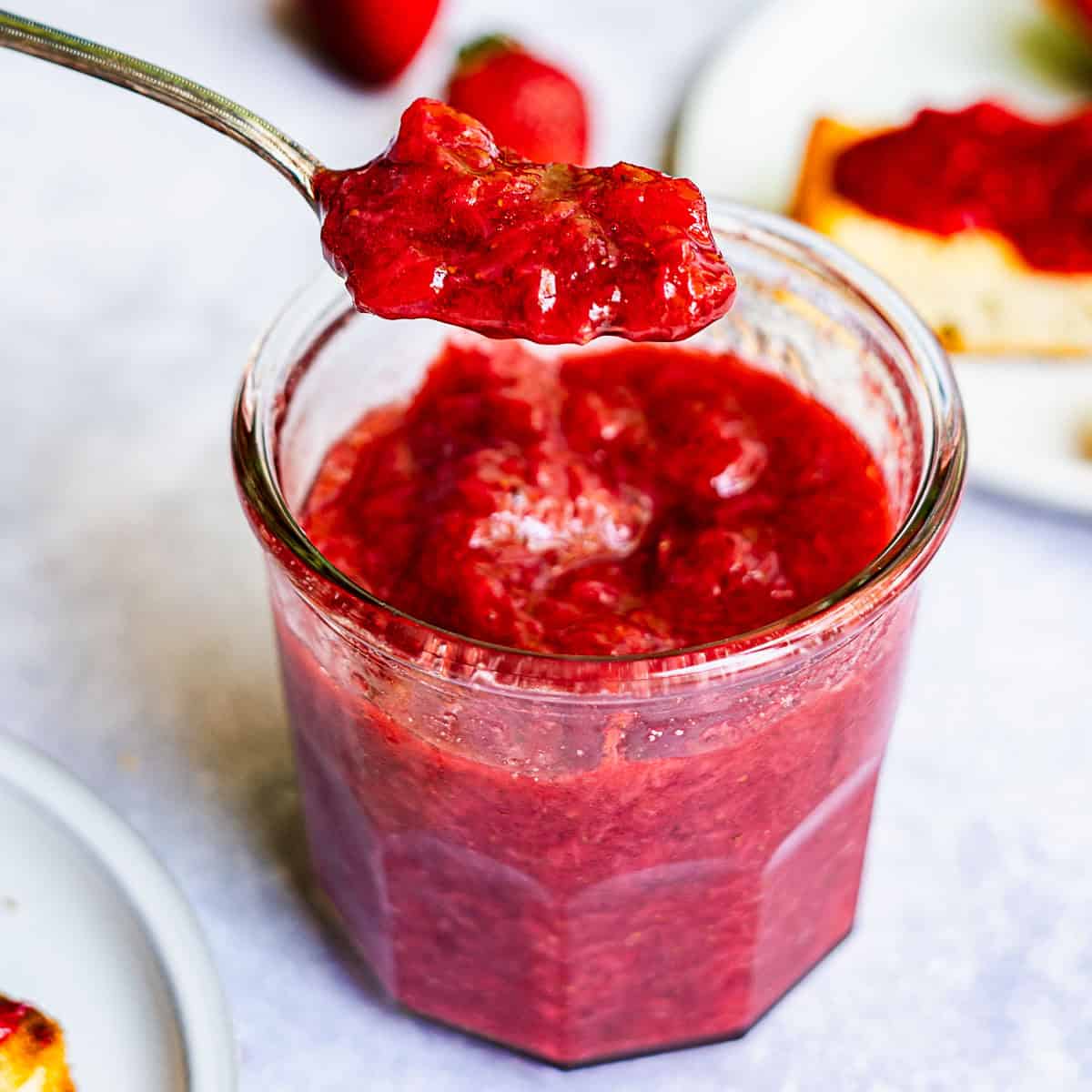
This homemade strawberry jam is made from only three ingredients, all while packing the sweet and fruity taste of peak-season berries into a jar of spreadable spoonable goodness! It’s brighter, fruitier, and way more flavorful than anything you’ll get sitting on a grocery store shelf. Easiest of all, there’s no added pectin; instead the jam is thickened using a classic technique that YOU can do right at home!
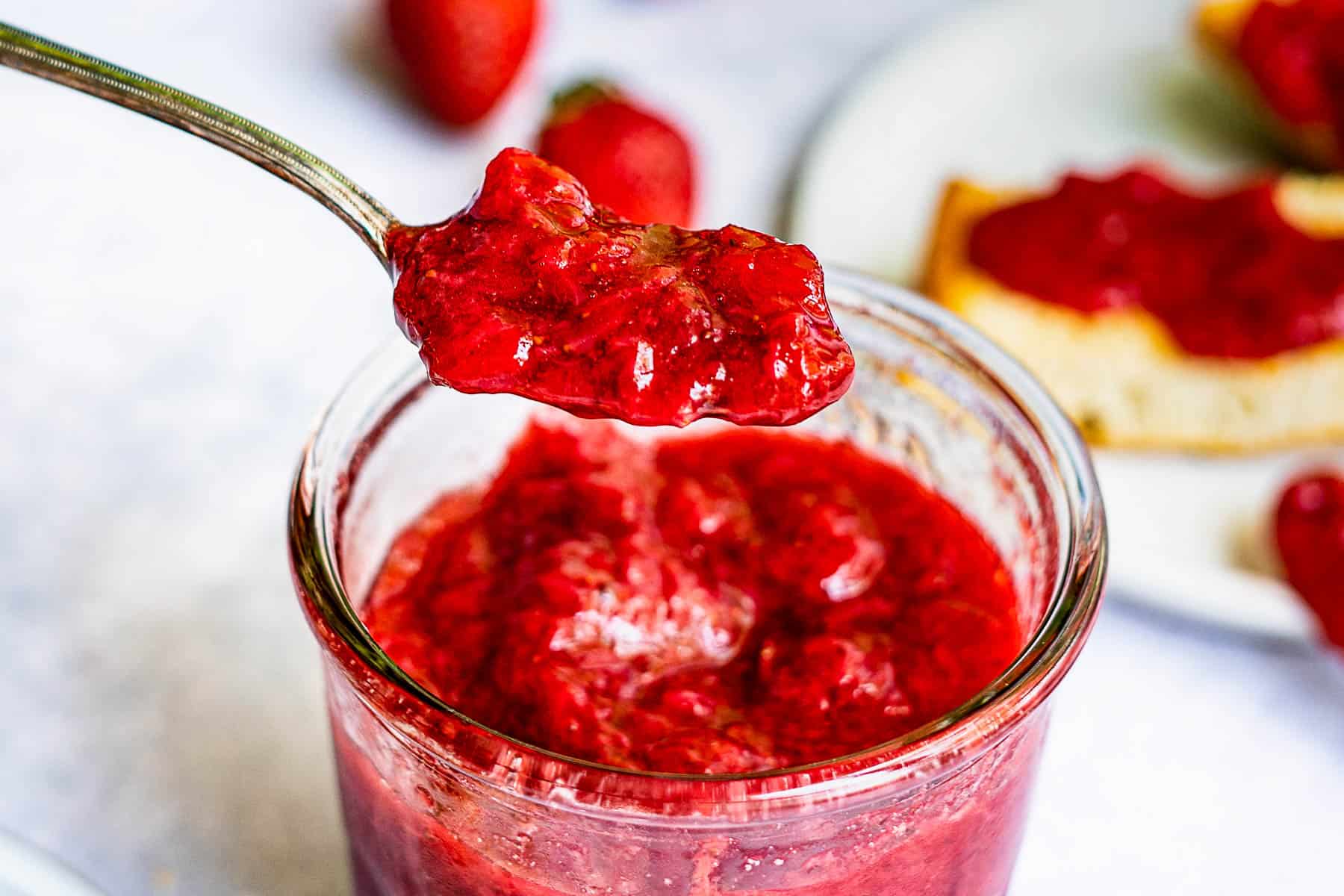
This is a simple and straightforward recipe that uses a technique I first learned in culinary school: reduction! There are also some sneaky lil flavor-building lessons that happen in the pan throughout the cooking process. 🤓 Sugar draws out the juices of the berries (aka maceration), fresh lemon juice acts as a pop of acidity that highlights the berry flavor, and the heat reduces everything into a glossy, scoopable jam.
This easy jam is what I love to make when strawberries are at peak season, when they ACTUALLY smell and taste like strawberries, not blandberries. And while this is the perfect spread to enjoy on toast, biscuits, and English muffins, I also love using it as an ingredient in other recipes.
For instance, these strawberry cheesecake rolls are made even better by using made-from-scratch jam! I also use it in my strawberry lemon bars, but I puree the strawberries first and strain them through a sieve to remove as many seeds as possible. Check the recipe substitutions section to learn how to do this! 😉
👀 the secret sauce…
✨ the flavor: This recipe hits The Balancing Act and The Feels Flavor Factors. Peak-season strawberries deliver that nostalgic “straight-from-summer” flavor, enhanced by a bit of granulated sugar + a spritz of lemon juice.
🎯 the method: Chop the berries then toss them with sugar and boil over medium-high heat. Cook until the mixture reduces, mashing the berries down to your desired texture as it simmers. Then cool, store, and enjoy homemade jam!
🏆 the win: You get custom-made strawberry jam that tastes punchier than store-bought jars, with enough structure to spread on toast, swirl into parfaits, or spoon over basically anything that could use a little pop of berry flavor!
what are The Flavor Factors?
The Flavor Factor Framework is my lil set of “flavor guideposts” for cooking with confidence! Less following recipes to a tee, more trusting your instincts, getting creative in the kitchen, and becoming a more intuitive cook! 👩🏻🍳
🛒 ingredients for making strawberry jam
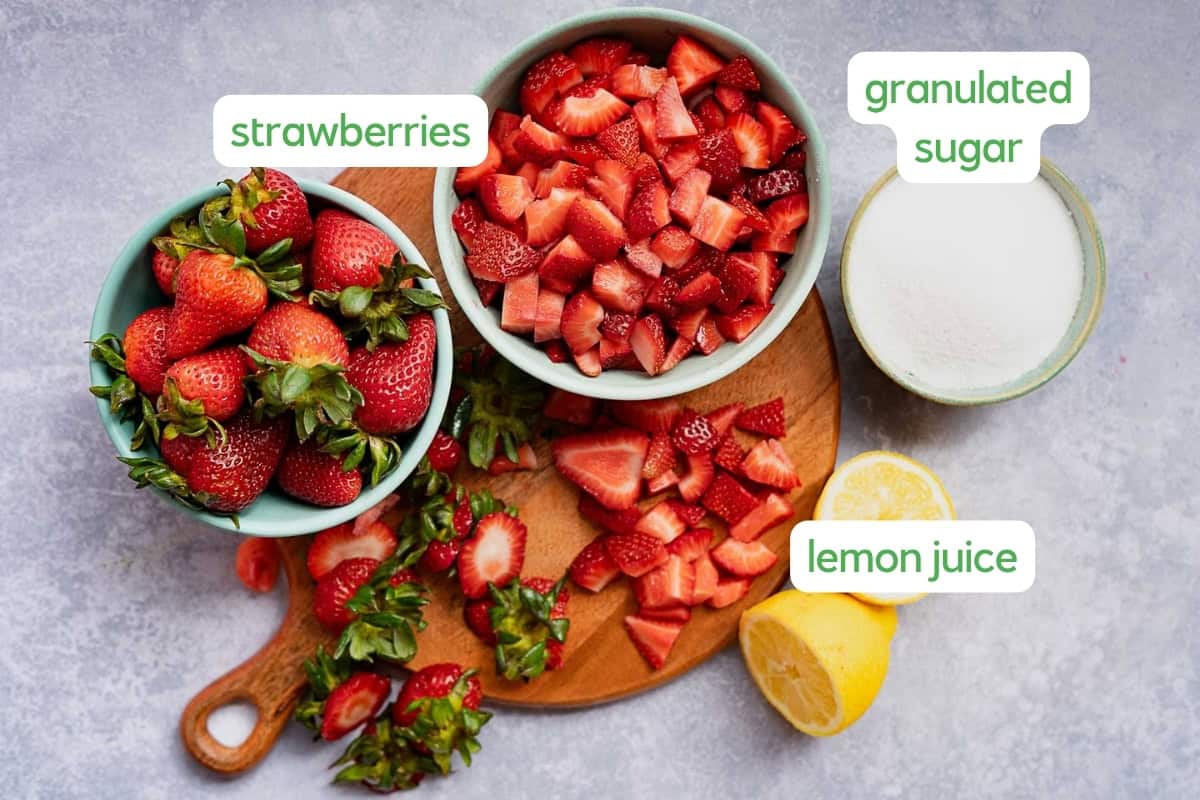
See the recipe card for the exact quantities.
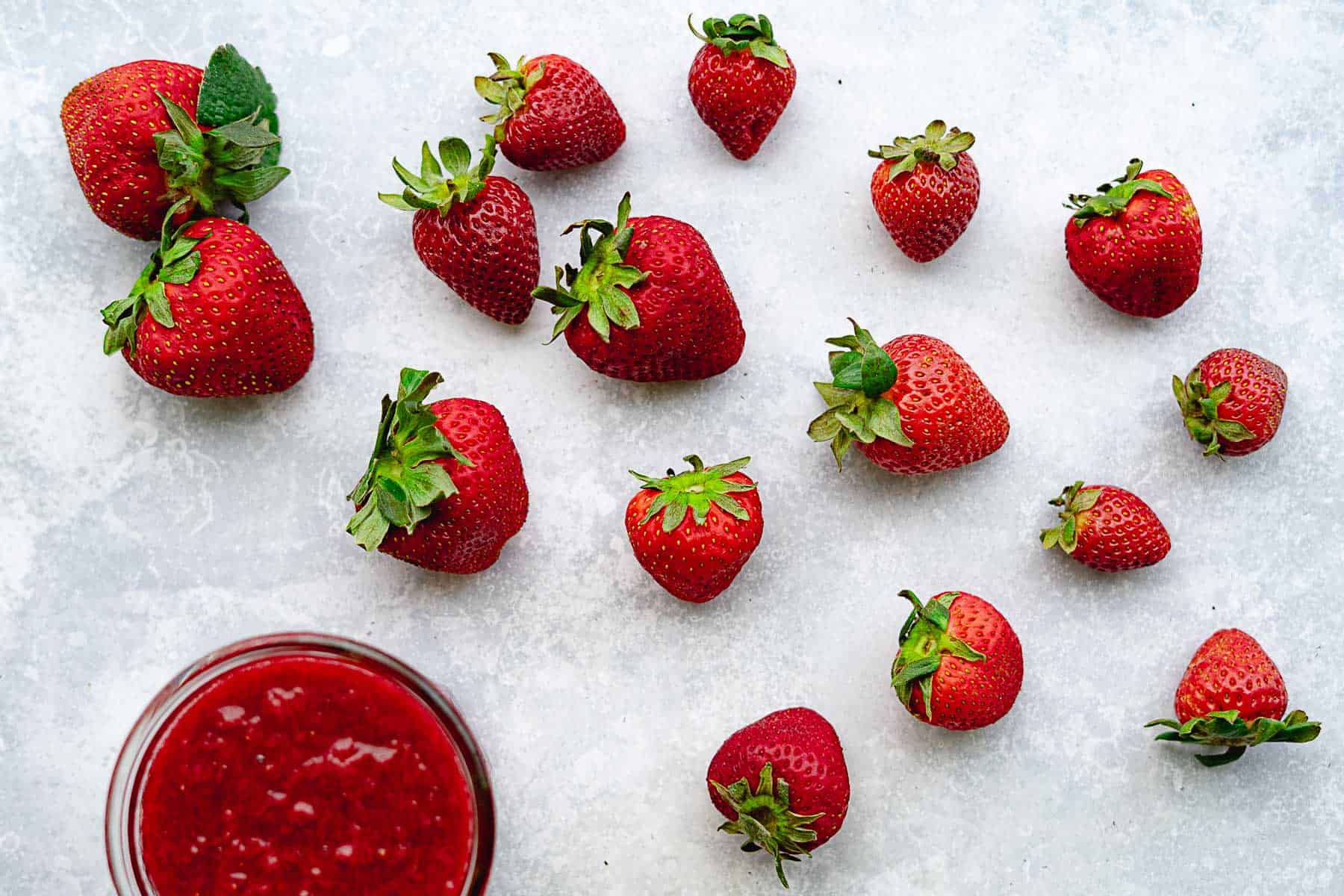
🍓 berry buying tip:
Try to select smaller-sized berries when you are cooking using strawberries because they’ll have a much better flavor than giant-sized berries.
The darker + deeper the color of the berry, the sweeter the taste! Strawberries do not ripen after they are harvested, so what you see is what you get! If your berries are lighter in color, they’ll have a more mild flavor.
Ripe berries smell fragrant and fruity, so if you are in doubt, give your berries a sniff in the store! If they smell like strawberries taste, they’re good to go!
Wanna save this recipe for later? 📬
🍳 how to make your strawberry jam
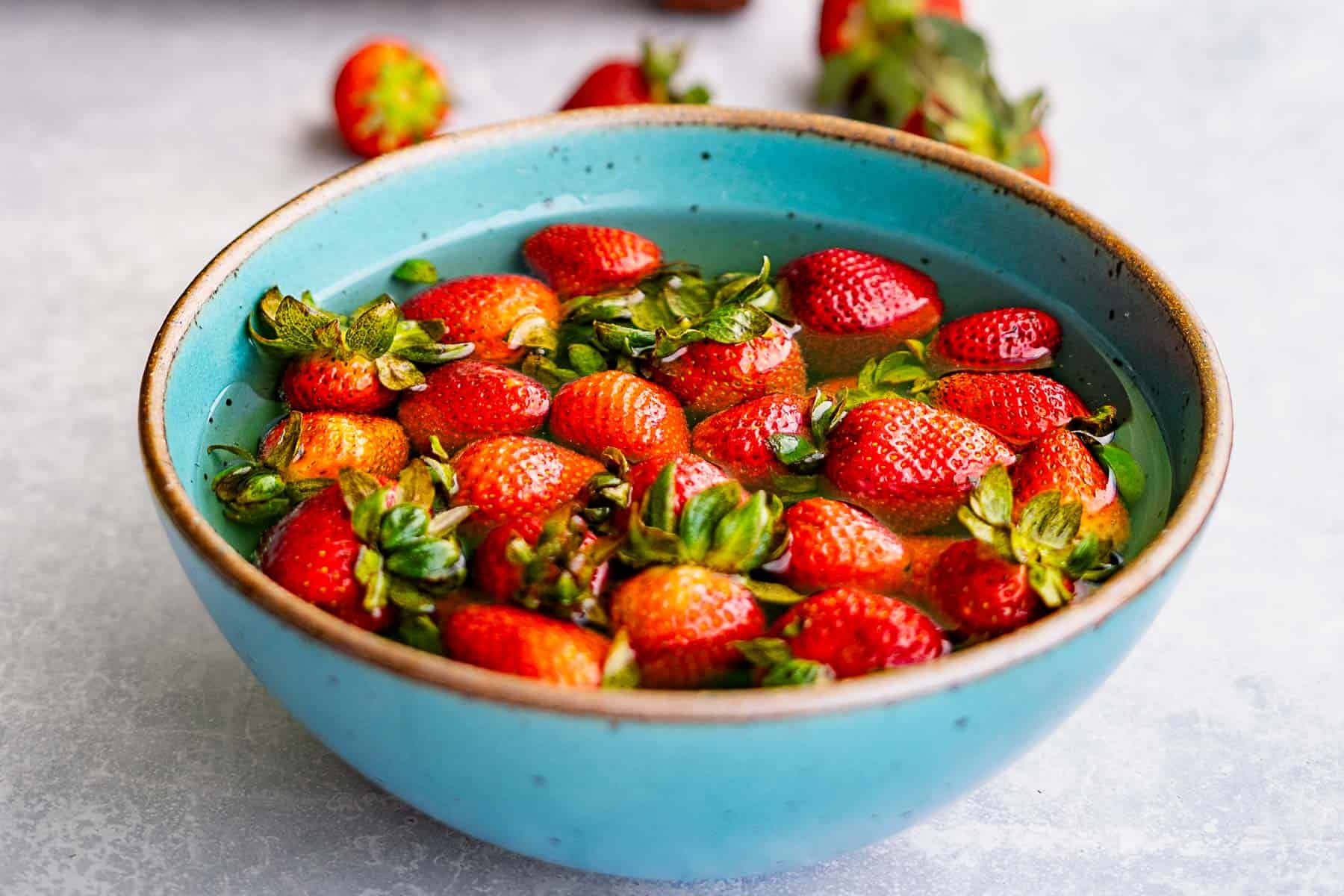
1: Wash and trim your strawberries, and hull the berries for the best flavor. You can leave the hulls in, but it will (lessen the) flavor a bit.
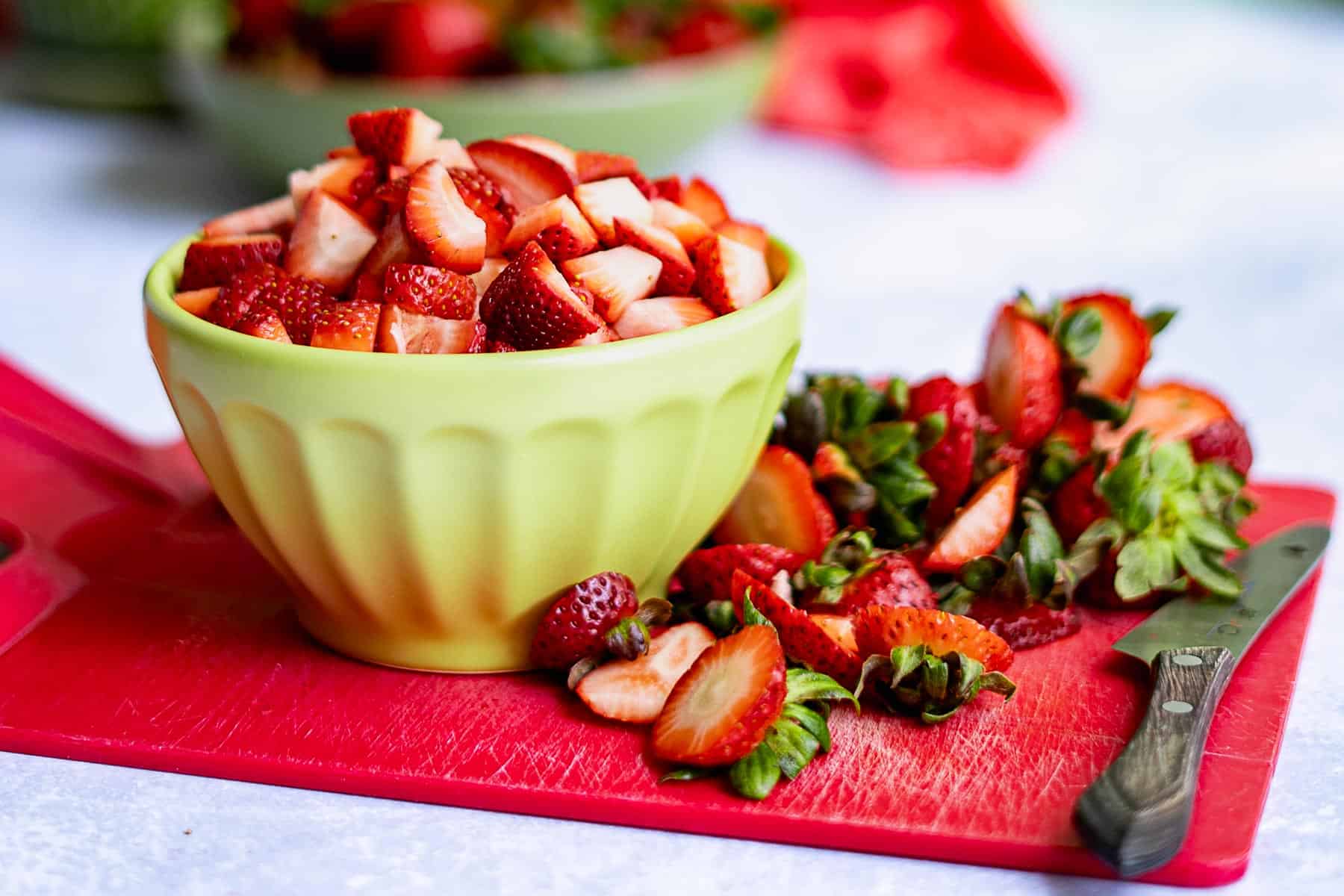
2: Chop your berries into roughly the same size pieces, about 1/4 of an inch per piece. If you like a chunkier jam, use larger pieces!
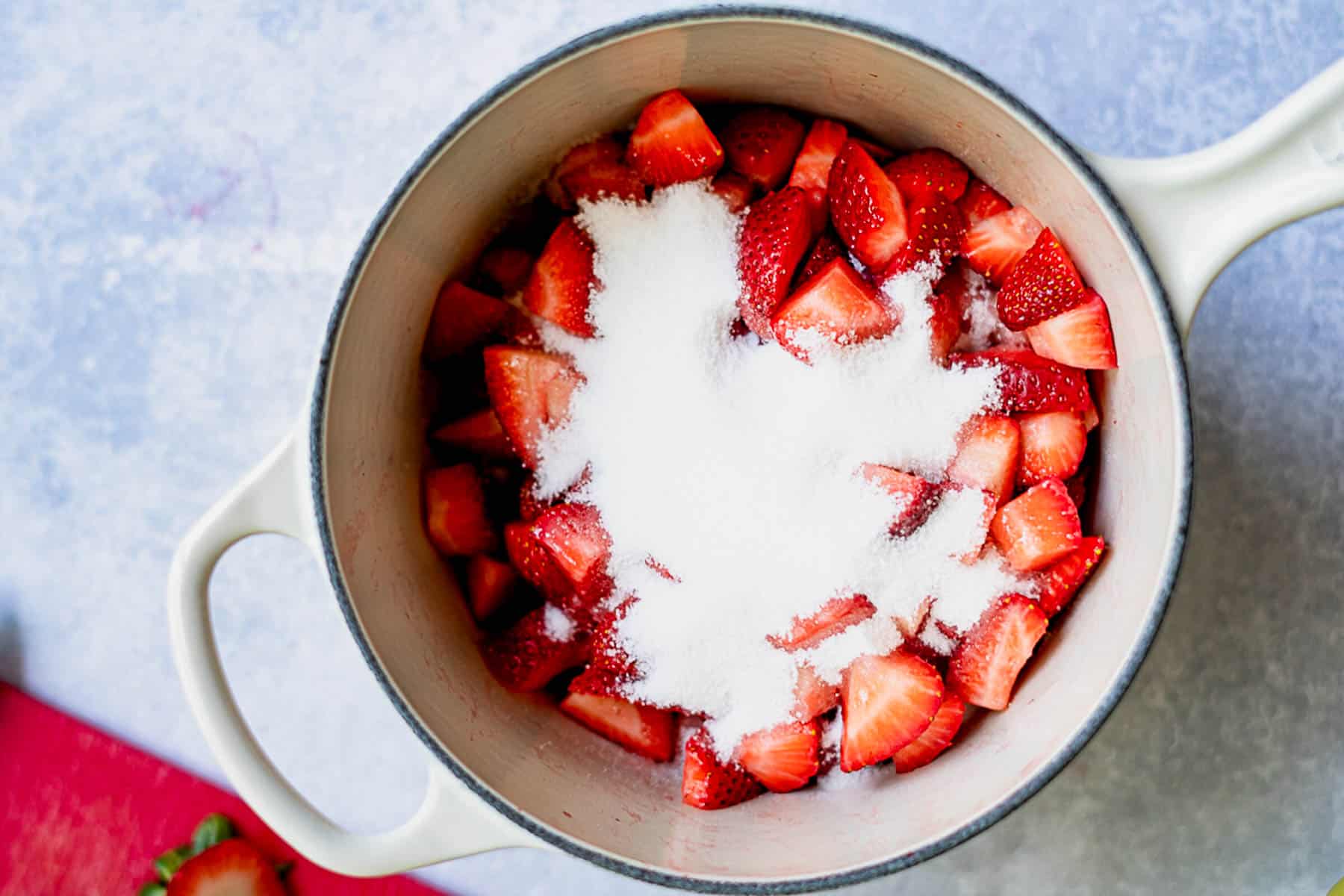
3: Combine your strawberry pieces with the granulated sugar, and allow the fruit to sit for about 5 minutes. The sugar “pulls” liquid out of the strawberries and creates a sort of strawberry soup right in the pot!
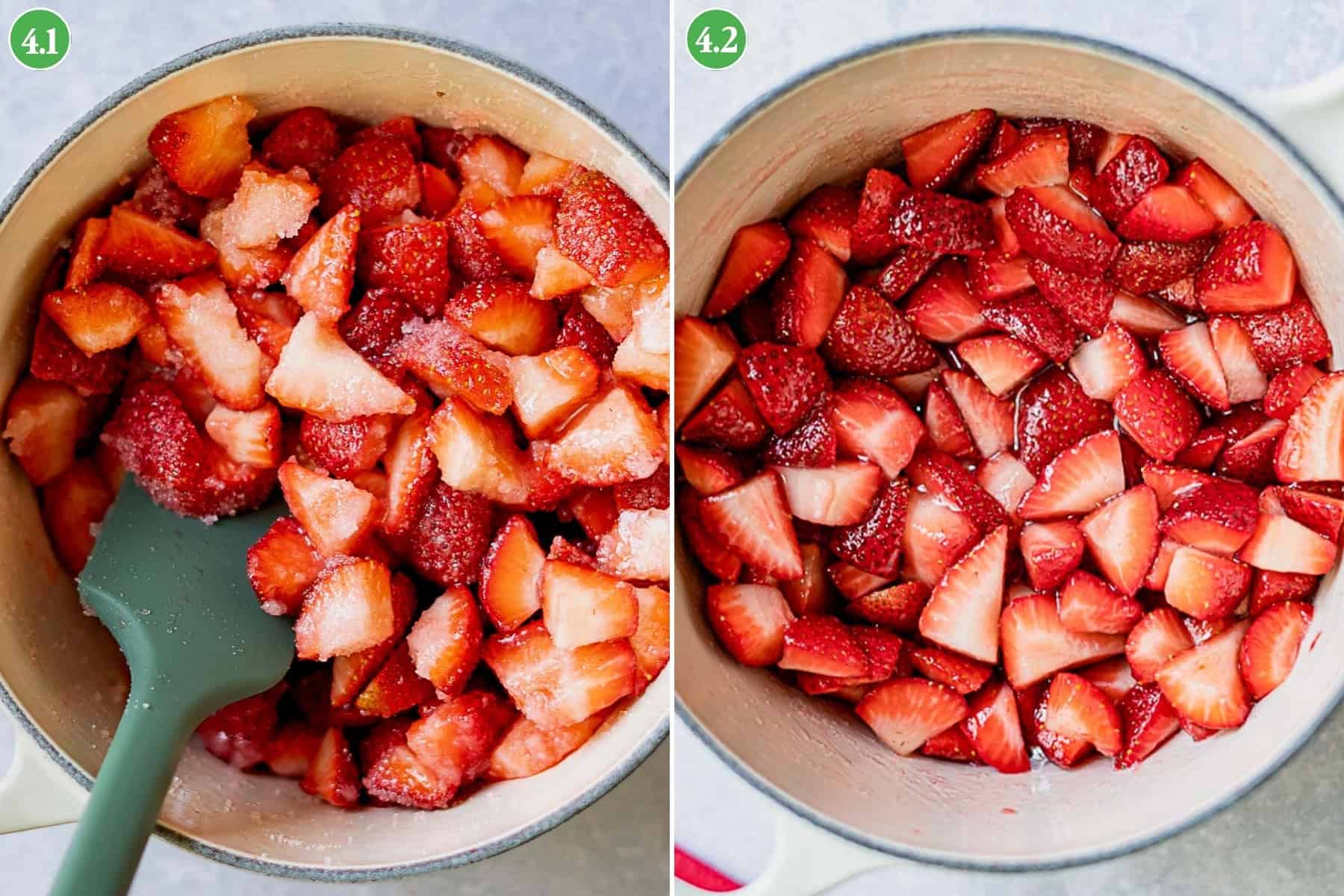
4: Stir the sugar + berries together, being sure to scoop the berries from the bottom of the pot. This process is called maceration: the sugar molecules are hygroscopic, which means that they absorb liquid from the berries.
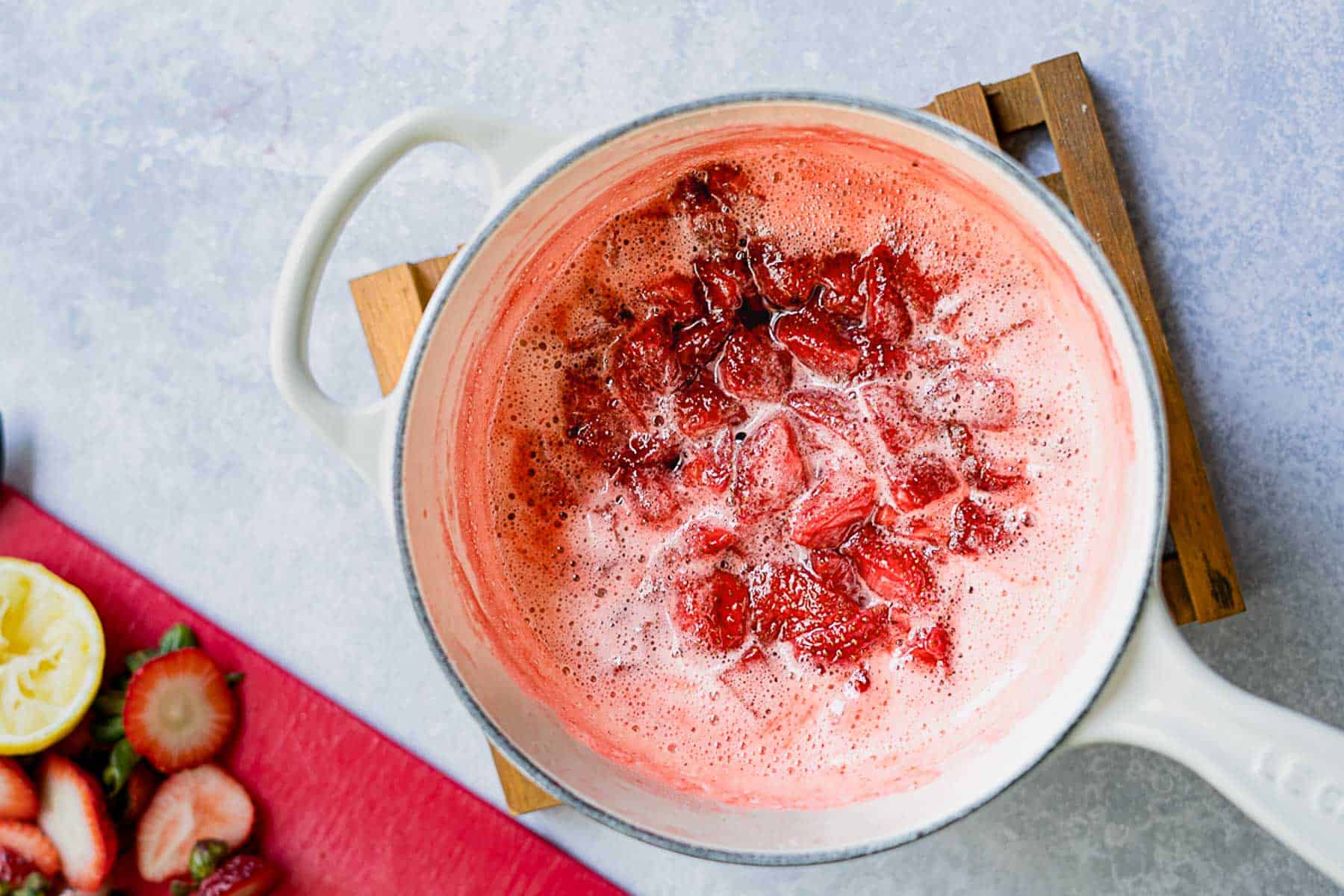
5: Place the saucepan over medium heat and stir the berry-sugar mixture while stirring every few minutes until the sugar has dissolved and the berries have softened.
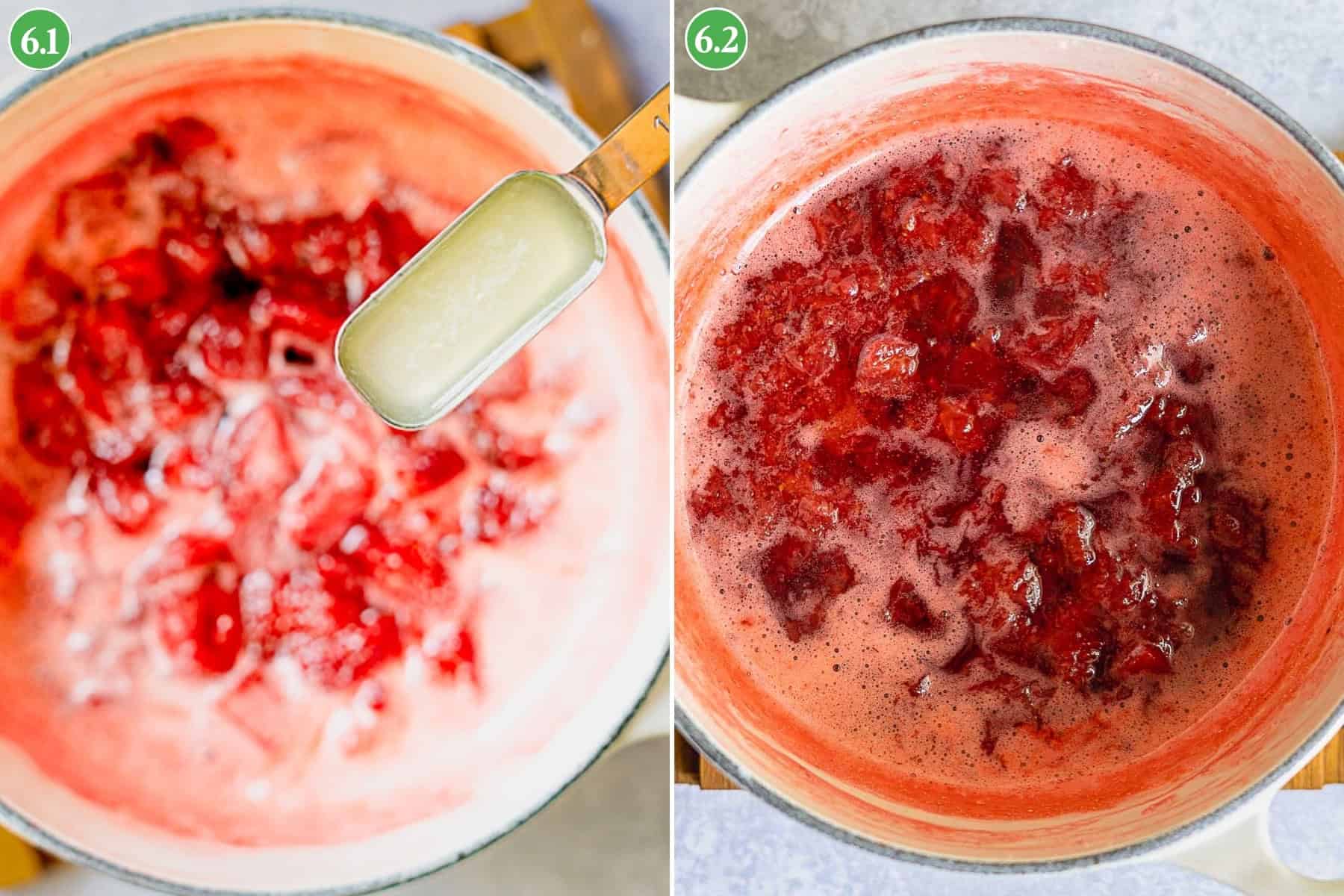
6: Keeping the pan on medium heat, allow it to maintain a strong simmer and cook for 30-45 minutes. Once the jam is as thick as you like, add in a bit of lemon juice, then allow the jam to cool
💡tips & tricks for getting it right
ℹ️ troubleshooting tips
- add the acid LAST – add your lemon juice RIGHT AFTER you’ve stopped simmering your jam to keep the flavor bright. Heating citrus juice at too high a temperature destroys its taste and does nothing for highlighting your berry flavors!
- sugar ratio – start with using less sugar if you like a less sweet, more fruit-forward jam. You can always pull a spoonful of jam out of the pot, allow it to cool, and taste it while you are cooking. If you like, you can add more sugar a few TBSP at a time to sweeten things up!
- berry flavor – use smaller berries for the best flavor, and make sure you choose berries that are fully ripe. Strawberries do not ripen more after they are picked, so if your berries have white or yellow portions on them, unfortunately, they will be very mild or even bitter in flavor. We’ve all fallen prey to those out-of-season berries that taste like *nothing* but the wisp of a memory of a berry.
- thickening – be patient with your jam when it’s cooking! Unless you’re using a thermometer to monitor the temperature (say that six times fast), you’ll want to keep your jam simmering at a steady pace to thicken up. Be sure to keep stirring every so often so the berries don’t burn!
🔆 top tip
Set a timer on your watch or phone so you don’t forget about your bubbling jam mixture! 😉 I’ve found the sweet spot to be around 45-60 minutes of vigorous simmering for a thiiiick jam.
♻️ customize your strawberry jam
- puree + add pectin– when I make my strawberry lemon bars, I prefer the jam layer to be smooth, firmer and vibrant. To do this, I puree the strawberries first with my immersion blender, then I strain them through a fine mesh sieve. Next, I add a bit of powdered low-heat pectin to help the liquid strawberry and sugar mix gel– a technique I learned in the MilkBar cookbook during the 2020 quarantine! This is the low-heat pectin I use (affiliate link)!
- sweetener – you can use natural or less processed sugar instead of granulated sugar to deepen the flavor of your jam!
- balsamic – elevate your jam with a 1-2 ounces of balsamic vinegar! The sweet, acidic flavor of the balsamic vinegar adds a flavorful punch to the strawberries.
- roasted – Roast the strawberries for 20-25 minutes at 350ºF to deepen the flavor of the berries before starting the recipe. Be sure to scrape off all the juices that cook out of the berries and use them in the pan, too!
🍽️ how to serve your homemade berry jam
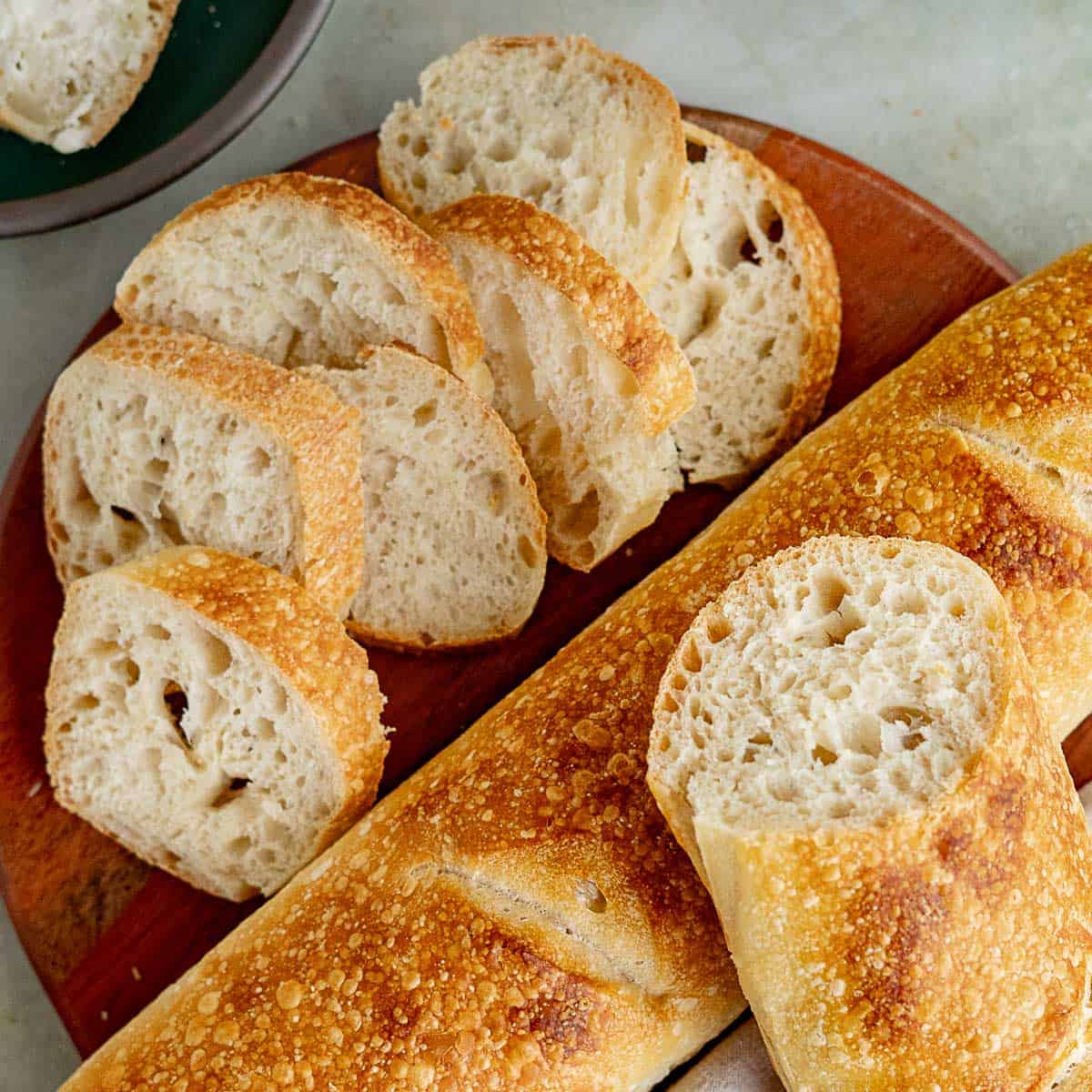
for breakfast or lunch
Spread your jam on slices of freshly baked baguettes, toasted english muffins, or level up your PB&Js at home. I also love using this jam to top oatmeal and muffin batter for fresh baked jammy muffins!
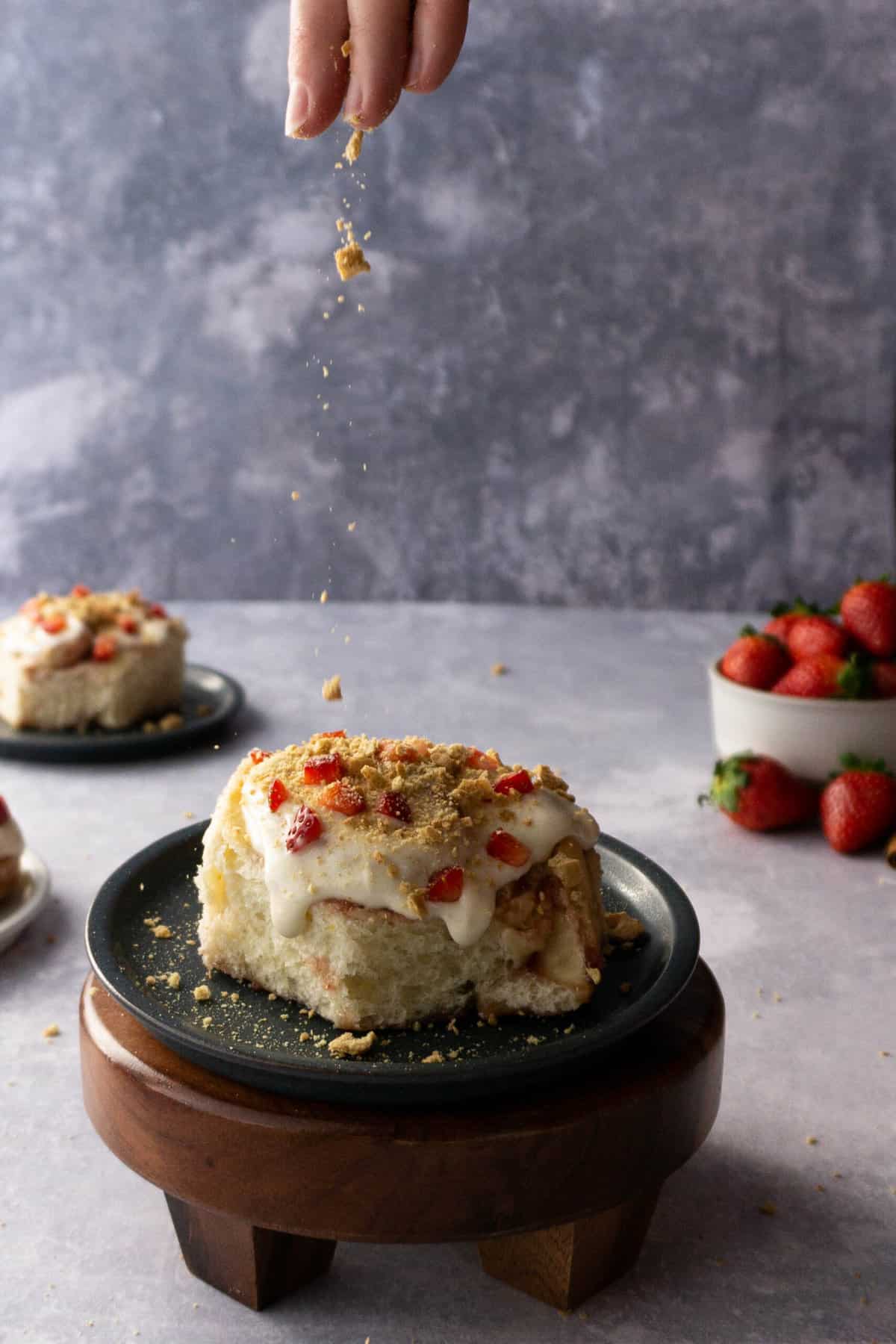
strawberry cream cheese rolls
These strawberry cheesecake rolls are an indulgent twist on traditional cinnamon rolls! While they don’t have cinnamon in them, they DO have tons of jam, cream cheese, and buttery graham crackers!

strawberry lemon bars
These tangy lemon bars are leveled up with homemade strawberry jam for an edible version of strawberry lemonade! They’re the perfect way to celebrate summer!
🧰 equipment needed & storage tips
🫙 how to store homemade jam
Store your jam for up to a week in the fridge. Jams that last longer have to be stored in sanitized jars and sealed using proper canning methods. That’s not exactly the process we’re doing here. Because of this, it won’t last as long as if you were to heat seal sterilized jars. But!!! You can freeze your jam for longer-term storage for up to three months.
👀 looking for more jam recipes?

💬 q+a
If you make this recipe, please leave a review in the comments and a star rating!
⭐️⭐️⭐️⭐️⭐️
I read every single comment, and each rating is helpful to other readers, too! 🥹
I also love connecting on social media, so snap a pic and hashtag it #myrecipeforfun and tag me on YouTube, TikTok, Threads, or pin this recipe on Pinterest!
Easy Homemade Strawberry Jam Without Pectin

Wanna save this recipe for later? 📬
Equipment
- 1 1.5-quart saucepan heavy bottomed, non-reactive.
- 1 glass jar with tight fitting lid
- 1 silicone spatula
- 1 pairing knife
- 1 cutting board
- 1 baking scale
Ingredients
- 600 grams strawberries about 1.5 pints of berries
- 100 grams granulated sugar 1/2 cup
- 1 tsp lemon juice small squeeze from 1/2 a lemon
Instructions
- Clean + prep berries. Wash, trim, and hull strawberries. Slice the berries into halves or quarters, depending on how chunky you would like your jam. The berries will break down as they cook.600 grams strawberries
- Add to saucepan with sugar. Place your berries into a 1.5 quart sauce pan. Add granulated sugar on top of the strawberries, and give everything a good stir.100 grams granulated sugar
- Macerate at room temp. Allow the sugar and berries to sit for 5-10 minutes. This process is called maceration. The sugar pulls moisture out of the berries.
- Heat mixture + cook down. Place the saucepan over medium-high heat, and allow the mixture to come to a simmer for 45 – 60 minutes, stirring occasionally to keep the berries from burning. If it is boiling too much, lower the heat to medium or medium-low.
- Watch for thickness + smoosh berries. You will notice the mixture becoming thicker, and jammy. You can also use your spatula to smush the berries against the side of the saucepan to break down the berries even further.
- Add lemon juice. Once the jam is about as thick as you like, turn off the heat but leave the pot on the burner, and add in a little squeeze of lemon juice.1 tsp lemon juice
- Cool. Allow the mix to cool for at least 30 minutes before transferring to a clean glass jar. Be sure to use a jar that can withstand the high heat from the jam as it will still be quite warm.
- Put in jar. Seal your jam with a tight fitting lid, and place it in the fridge to cool overnight. The jam will thicken up considerably as it cools.
- Use or store. Store your jam in the fridge for up to two weeks, or freeze it for up to three months.
Notes
troubleshooting tips
-
- thickening – be patient with your jam when it’s cooking! Unless you’re using a thermometer to monitor the temperature (say that six times fast), you’ll want to keep your jam simmering at a steady pace to thicken up.
-
- sugar ratio – start with using less sugar if you like a less sweet, more fruit-forward jam. You can always pull a spoonful of jam out of the pot, allow it to cool, and taste it while you are cooking. If you like, you can add more sugar to sweeten things up!
-
- berry flavor – use smaller berries for the best flavor, and make sure you choose berries that are fully ripe. Strawberries do not ripen more after they are picked, so if your berries have white or yellow portions on them, unfortunately, they will be very mild or even bitter in flavor.
ingredient swaps & customizing your Jam
-
- puree and pectin– when I make my strawberry lemon bars, I prefer the jam layer to be smooth and vibrant. To do this, I puree the strawberries in a blender first, then strain them through a fine mesh sieve. Then, I add a bit of powdered low-heat pectin to help the liquid strawberry and sugar mix gel– a technique I learned in the Milk Bar cookbook during the 2020 quarantine!
-
- sweetener – you can use natural or less processed sugar instead of granulated sugar to deepen the flavor of your jam!
-
- balsamic – elevate your jam with a 1-2 ounces of balsamic vinegar! The sweet, acidic flavor of the balsamic vinegar adds a flavorful punch to the strawberries.
-
- roasted – Roast the strawberries for 20-25 minutes at 350ºF to deepen the flavor of the berries before starting the recipe. Be sure to scrape off all the juices that cook out of the berries and use them in the pan, too!