




Have you ever taken a sip from a drink and felt like it just sorta fell….flat? This saline solution for cocktails and mocktails will soon become your favorite secret weapon on your bar cart next to bitters! It acts as a liquid seasoning to easily balance out nearly any drink, even your morning coffee!
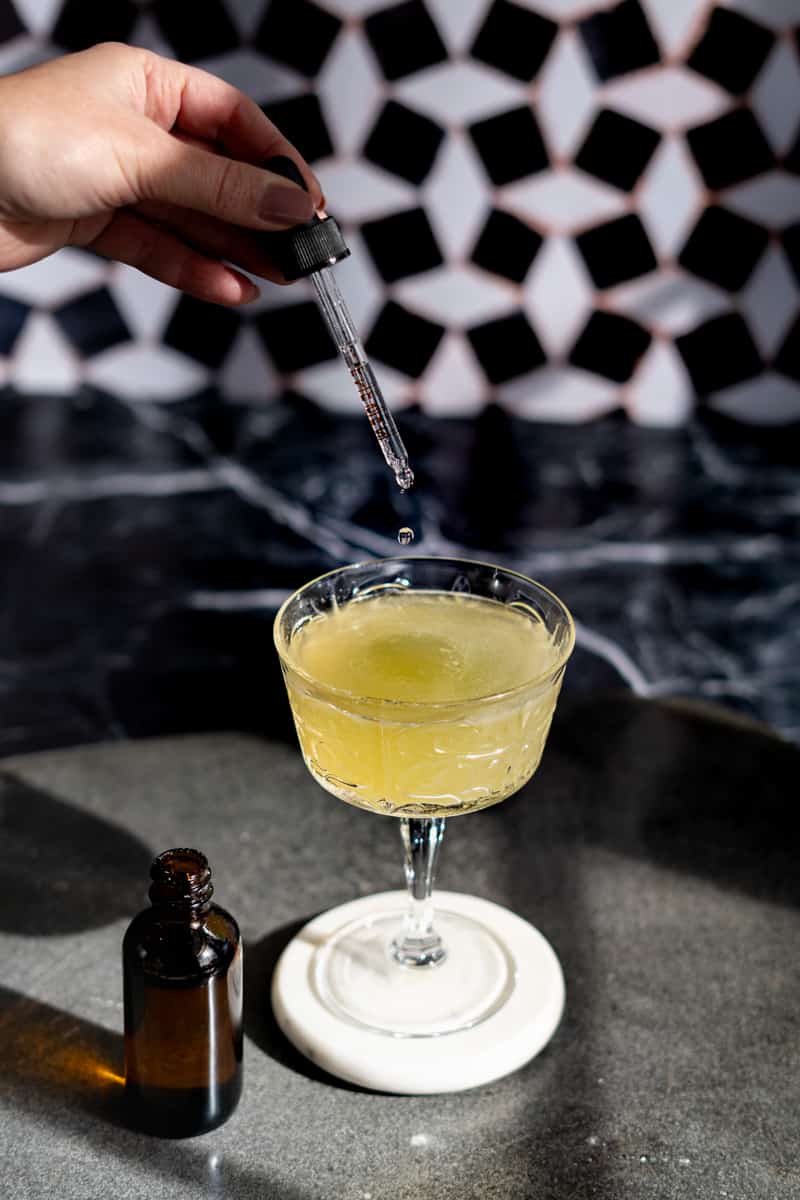
After over 10 years of making homemade cocktails and mocktails, I’ve noticed some common problems that people run into at home. One of the biggest issues across the board is that people struggle with balancing the flavors in their drinks.
This recipe was inspired by many of my mocktail recipes, like this non-alcholic paloma and this easy Moscow mule mocktail. The problem with a lot of alcohol-free drinks is that they are overly sweet, to the point of being cloying. 😬 The same can be said with a lot of tropical cocktails, which rely heavily on fruit-infused simple syrups and freshly squeezed juices. This is NOT the same thing as drugstore saline solution, which is not meant for consumption. This saline solution is specially prepared just for your drinks, so you can help balance the flavor to your own taste buds!
⏱️ tl;dr: what is a saline solution + why make it?
A saline solution for drinks is salt dissolved in water to help balance flavors in cocktails, mocktails, and more. This is NOT the drugstore version of saline: this is a 20% salt solution you can add to your drinks using a small dropper bottle for precise measuring. It helps balance flavor profiles to highlight (or erase) tastes to your specific preferences! Sound like magic?! It kinda is!!! 🪄 Here’s the quick process:
- 20 g salt (YES BY WEIGHT 😤)
- 80 g water
- Stir to combine until salt is dissolved, then store in a dropper bottle.
- Start with 2-3 drops per drink, then taste and add more 1 drop at a time if needed.
Wanna dive deeper into the ins and outs of how to use a saline solution, tips for getting it right, and more info? Keep reading! 👀
👀 the secret sauce…
✨ the flavor: This recipe is all about The Balancing Act Flavor Factor. A few drops of saline solution play up the nuanced notes in your drinks while evening out the sweetness. Think of it like adding bitters to cut sourness. It helps all the other flavors in your cocktail, mocktail, or even your morning coffee really pop!
🎯 the method: Unlike salt crystals that need time to dissolve (and can leave you with a grainy texture…ew), saline solution is already liquid and ready to go. Just add a drop or two, give it a stir, and boom. Instant flavor upgrade. Works in hot drinks, cold drinks, literally anything!
🏆 the win: This is your secret weapon for making drinks that taste restaurant-quality. Your friends will be asking what makes your cocktails and mocktails taste so good, and you get to casually mention that it’s just a few drops of salt water.
what are The Flavor Factors?
The Flavor Factor Framework is my lil set of “flavor guideposts” for cooking with confidence! Less following recipes to a tee, more trusting your instincts, getting creative in the kitchen, and becoming a more intuitive cook! 👩🏻🍳
🛒 ingredients needed to make a saline solution
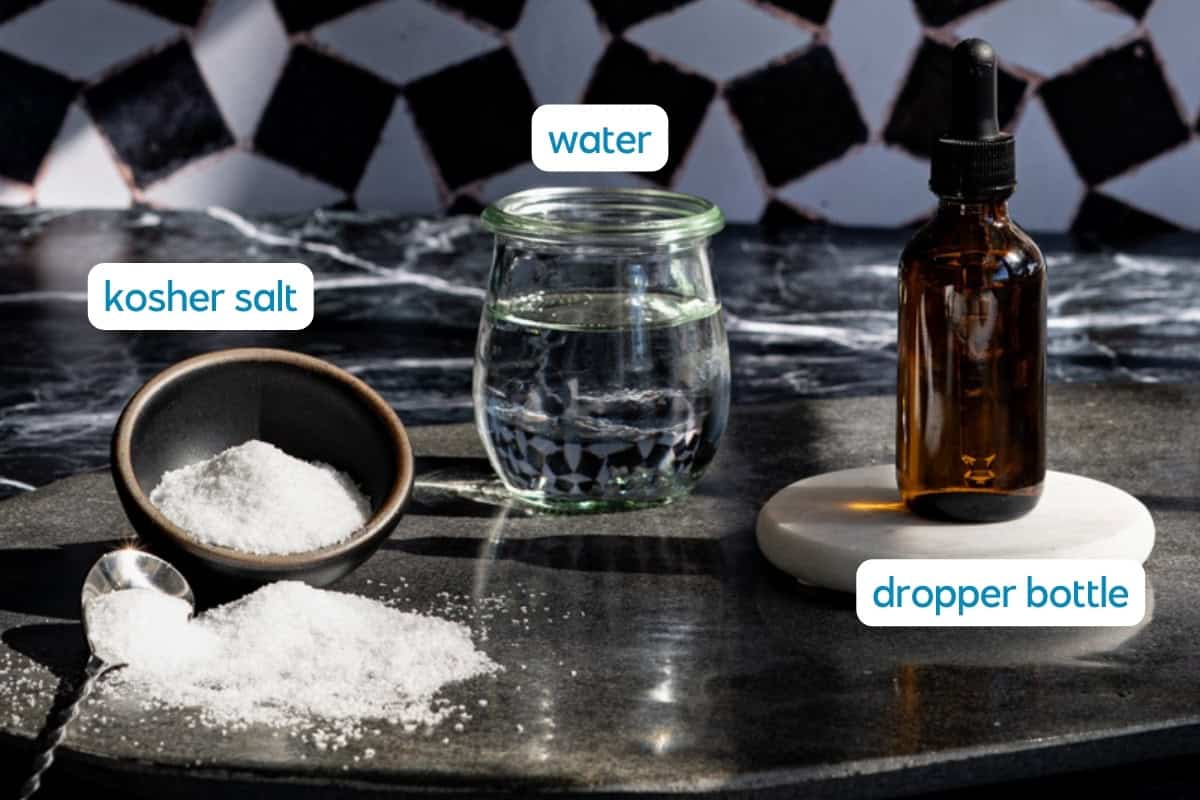
- kosher salt – this recipe uses kosher salt, because that’s what I use in my kitchen for cooking and baking! I like using both Diamond Brand Salt or Morton’s, but this recipe was specifically created with Diamond Brand. Morton’s salt is coarser in size, so the crystals are bigger, and they take up more room when measuring by volume, like when you scoop it out using a teaspoon. Do not use regular table salt. Sea salt will also affect the final flavor of your solution.
- filtered water – using filtered water means there won’t be any funky flavors in your saline solution.
see the recipe card for exact quantities.
🧂 all about salt
All salt is not equal. Here’s a quick breakdown of the different kinds of salt available in most grocery stores today.
- kosher salt – this salt is larger in size and contains no additives. This makes it easy to measure and adjust the saltiness in your recipes. It has a clean salty flavor profile with no aftertaste, making it perfect for any recipe.
- table salt – this salt contains added minerals, like iodine, that can impact the final flavor of your recipes. It also has a small grain size. Smaller granule = more salt grains in each pinch. This means it’s easier to over salt your food and drinks.
- Himalayan pink salt – this salt is light pink to rosy pink in color and is sold in small rocky grains or larger blocks that you can grind up. It has a lovely delicate flavor and no additives, making it a nice alternative to kosher salt.
- flaky sea salt – a favorite among chefs for finishing dishes, flaky sea salt adds a burst of crunchy salty flavor. It can vary in flavor depending on the manufacturer and region it comes from, so it can be tricky to use interchangeably in all of your recipes.
- sea salt – finer in grain size than flaky sea salt, but similar in taste profile. Like the flakier version, this salt can vary depending on where it was harvested.
- specialty salt – there are tons of specialty salts on the market, like black salt, grey salt, and even flavored or infused salts. You can definitely experiment and have fun! Just be aware that using specialty salts will impact the final flavor of your saline solution.
🍳 how to make saline solution for drinks
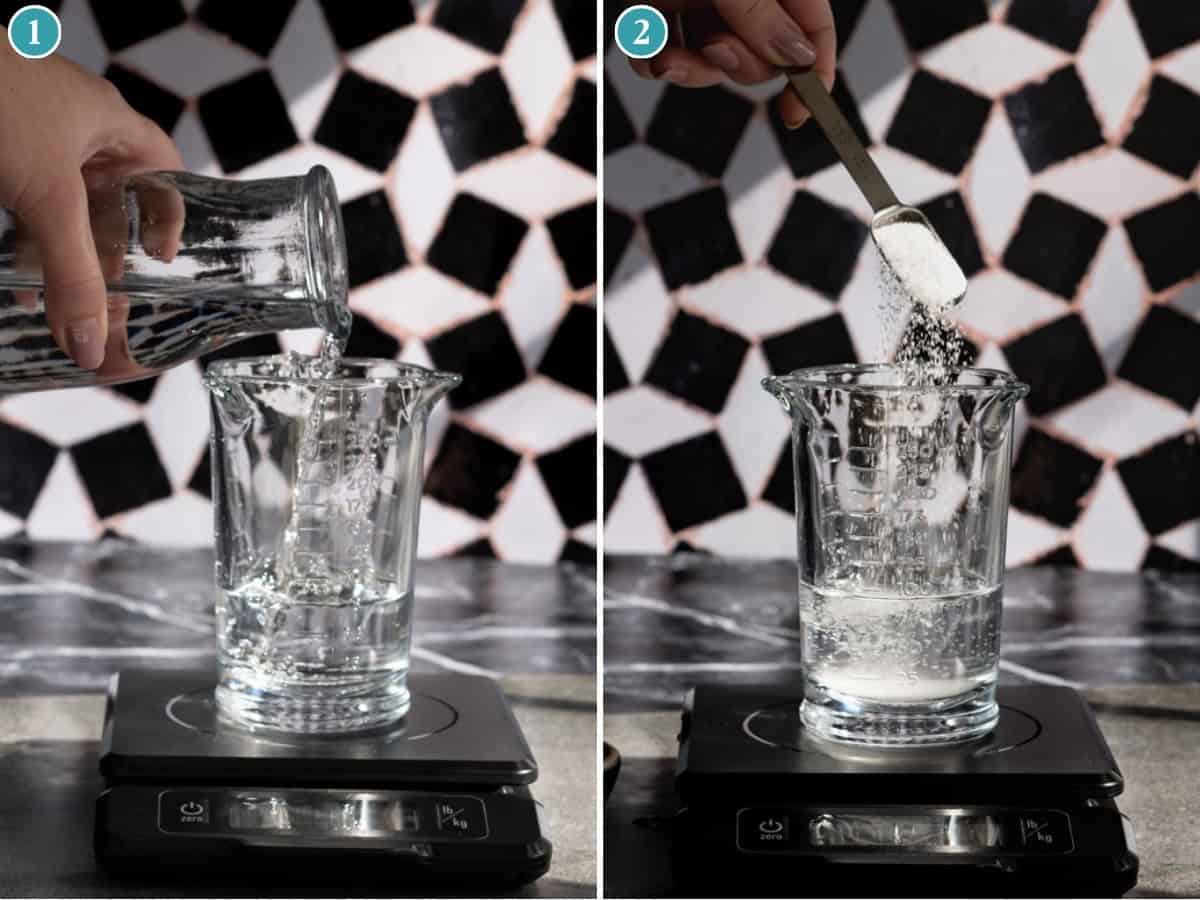
Step 1: Measure out 80 grams of water into a measuring glass using a kitchen scale.
Step 2: Measure out 20 g of salt into the water using a kitchen scale.
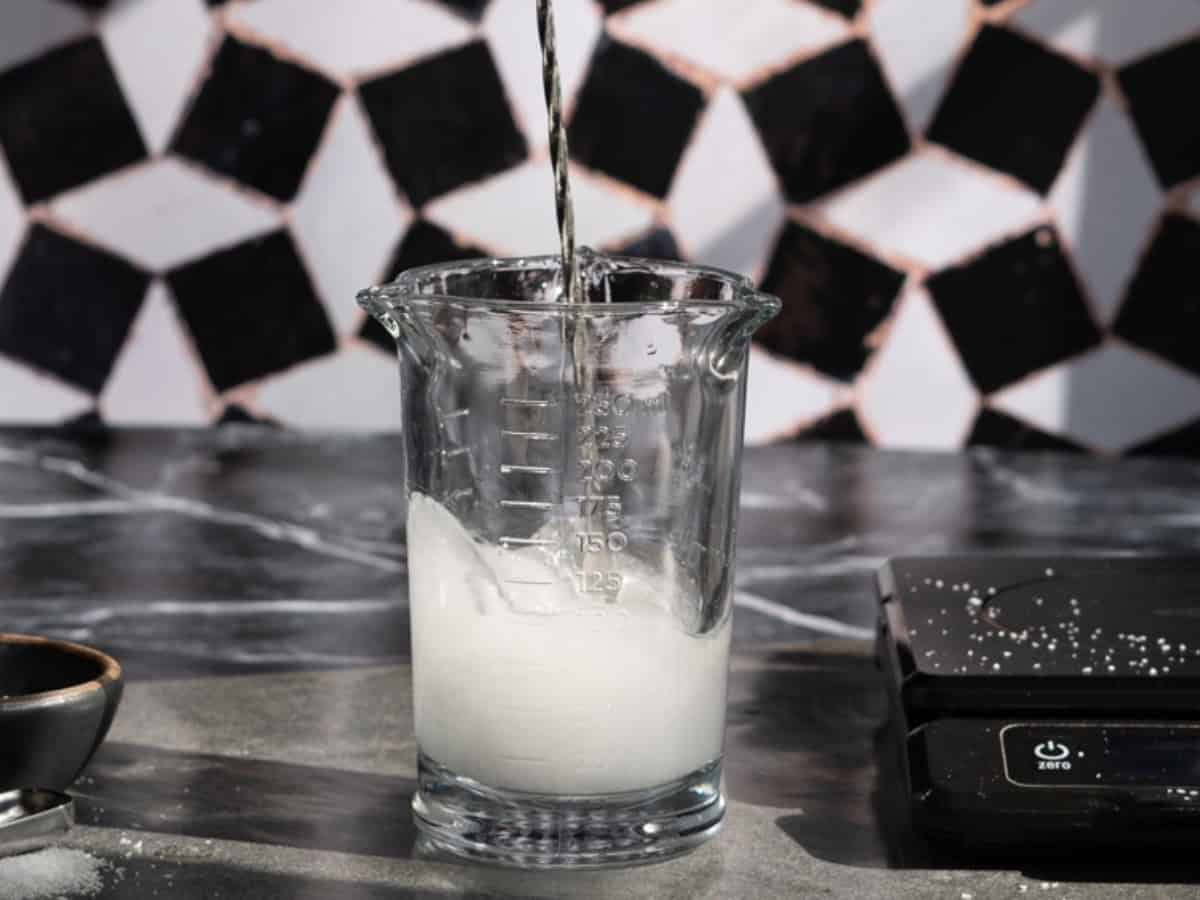
Step 3: Stir to mix. This helps the salt dissolve a little quicker.
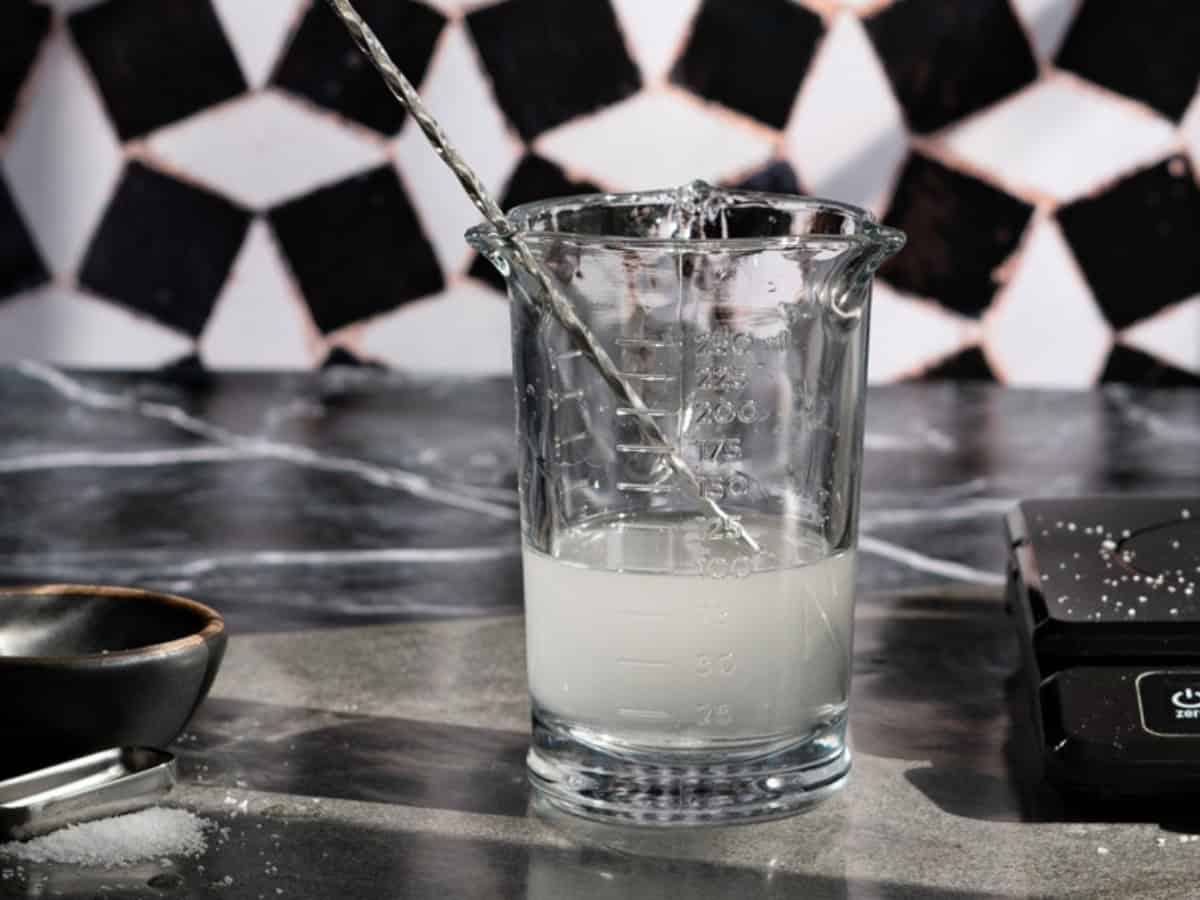
Step 4: Allow the mix to sit for a few moments while the salt continues to dissolve. You’ll know it’s finished when the liquid is clear!
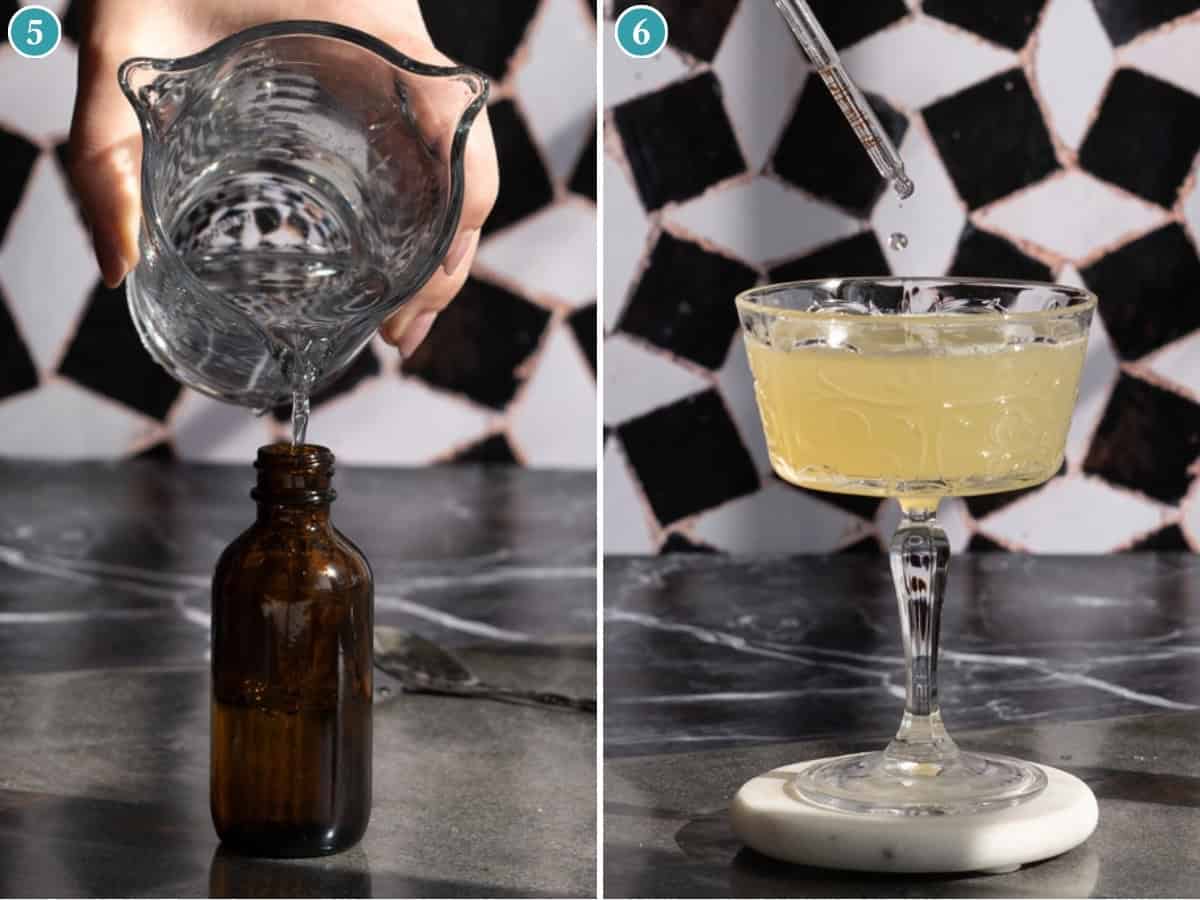
Step 5: Pour your finished mixture into a glass dropper bottle for storage.
Step 6: Store your saline solution in a cool, dark place. You do not need to refrigerate it, but you can! Use your saline solution in all your beverage recipes!
Hint: If your salt won’t dilute from stirring, you can allow it to sit in the water until it dissolves, then give the mix a gentle shake or stir. You can also heat your water first to speed the process up!
Wanna save this recipe for later? 📬
💭 why use saline solution in drinks
Beyond the rim of a margarita
Rumor has it salt used to be used to hide the taste of poor quality tequila. Any college student taking a tequila shot can vouch for this. No shade to the jungle juice and hunch punch lovers of the world, but those days are way way way behind me. 🥴 Nowadays, I’m more set on curating truly enjoyable experiences with each cocktail or mocktail, and as it turns out, salt is our friend!
salt = flavor
Just like in the culinary world, salt can highlight flavors in your beverages, too. Think of any cookie recipe you’ve seen: you add salt. It helps highlight the sweetness, and create a balance of flavors.
The same is true in drinks, especially those that skew towards the sweeter side, like tropical drinks and mocktails. Just like simple syrup can help sweeten a beverage, using just a pinch of salt is a great way to bring out the other flavors in the beverage. While I’m no longer an active AB fan, I first learned about the glory of adding a pinch of kosher salt to coffee to bring out the flavor on Good Eats.
mixology at home
Many bars are employing the magic of salt on their cocktail menus these days, whether they’ll tell you or not! 🤐 Dave Arnold is probably the most widely attributed bartender with the saline solution technique. He wrote a book called Liquid Intelligence that is full of fun and wild mixology techniques that are (mostly) doable at home.
Then Garret Richard and Ben Schaffer wrote the book Tropical Standard, where they make the case that nearly every tropical drink benefits from a small supply of salt (affiliate link). The best part about a saline solution is that is it super easy to make at home, and requires no specialty equipment aside from a dropper bottle, which you can pick up for less than $10. No centrifuges or immersion circulators necessary.
💡tips & tricks for getting it right
ℹ️ troubleshooting tips
The most important thing to remember with using saline solution in drinks is you can always add more, but taking saltiness away is difficult, if not impossible. Try these troubleshooting tips to have the most success with your saline solution!
- perfect your ratio of salt – As a general rule, you need to use 20 grams of salt and 80 grams of water to make a 20% solution. 20 + 80 = 100 grams! And 20% of 100 is….that’s right, 20! Stick with a 20% solution instead of upping it to a 30% or 40% solution. You can always add more drops of the solution if you want it saltier. LOTS of bartenders have done LOTS of trial and error with cocktail chemistry and found that 20% is the ideal ratio of saltiness to water.
- type of salt – check out the mini guide of types of salt in the ingredient section of this post to choose the best salt for you. Different types of salt will produce a different flavor of saline solution.
- level of saltiness – Make sure you measure your saline solution using a kitchen scale. This helps to ensure the precise level of salinity, or saltiness, needed so your solution is balanced. It’s also helpful if you use different brands of salt, which can be coarser or finer in size. If you’re measuring with a teaspoon, you run the risk of adding in too much salt.
- bitter flavors – salt can cut bitterness, which is sometimes in certain bitter aperitifs on purpose, like in a summery Aperol spritz. In drinks where you want a certain amount of bitterness to be prominent (like Italian mocktails and cocktails), you’ll want to limit use of a saline solution.
🔆 top tip
Use the correct ratio, which is 20 grams salt to 80 grams water, NOT equal parts water and salt.
🍽️ how to use saline solution in drinks
🍸 cocktails that benefit from saline solution
One of the best ways to do this is to make two drinks, and add saline solution to one. Then, do a side by side comparison! This is also a fun thing to do at a party with friends or family. You can conduct a blind taste test as a fun party game! Try it the next time you get together with friends!

classic daiquiris
A small seasoning of salt helps round out the flavors of lime juice, simple syrup, and rum in this classic daiquiri recipe!

margaritas
Skip salting the entire rim and add 3-5 drops of saline into your margaritas. Truly, you’ve never had a more balanced margarita than this fresh agave margarita!

tropical drinks
Are your limes overly acidic or bitter? You can balance out the flavor of very acidic ingredients by using this salt solution in your tropical drinks like fruity mojitos!
🍹 using saline in mocktails
Mocktails are notorious for being packed with sweet flavors. Thankfully, they’re starting to be taken more seriously in the cocktail world. The addition of salt takes your mocktails to the next level, which will help showcase the flavors of your non-alcoholic drinks! Add 1-5 drops to your favorite zero-proof drinks to balance the flavor out.

virgin moscow mule
A little salt helps to balance out the acidity of the fresh citrus and sweetness from ginger beer in this zero-proof mule.
zero proof paloma
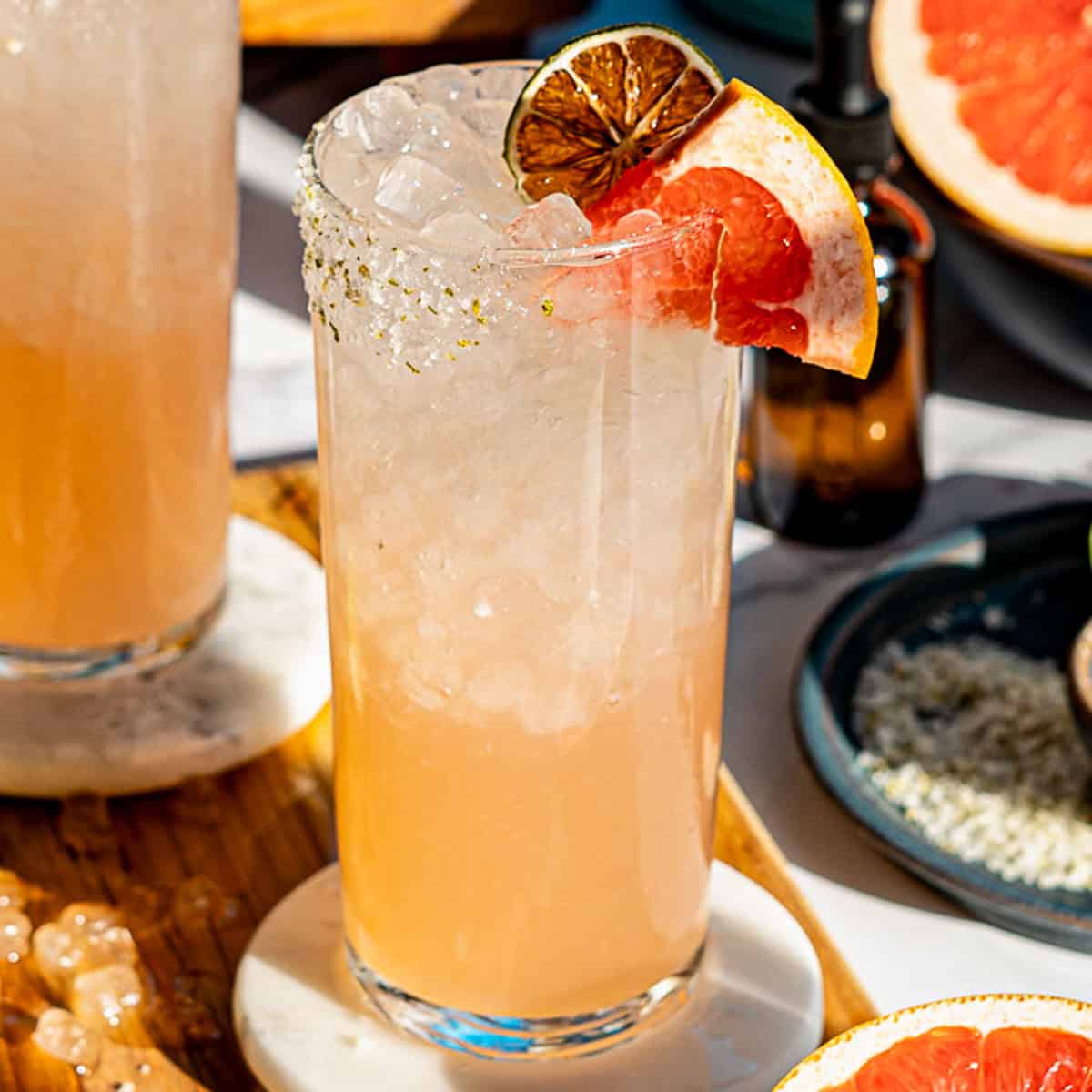
A paloma is another one of those classic cocktails that benefits from a little saltiness, and this paloma grapefruit mocktail is perfectly balanced thanks to the saline solution!

n/a espresso martini
This virgin espresso martini looks and tastes just like the real thing, without the booze! A drop of two of saline solution can help balance any bitterness from the espresso, too!
🥤 other drinks to use your saline in

coffee drinks
I love using this saline solution in everything from unsweetened americanos to cold brew coffee to flavored lattes like this iced cardamom latte recipe!

seasonal lemonades
A little saline solution can play up the complex and delicate flavors of citrus and tropical fruits. This homemade lilikoi lemonade benefit from a boost of a little bit of saline solution! It helps brighten the flavor of both the lemon and the passion fruit!

sweet drinks
Did you accidentally add too much syrup to your homemade soda pop? Try adding a drop or two of saline solution to cut the sweetness of your drink!
🧰 equipment needed & storage tips
🫙 how to store your homemade saline solution
Your finished saline solution will technically last indefinitely. Label and date it for your own reference, and if anything ever tastes “off,” it’s best to toss it and make a new batch.
💬 q+a
If you make this recipe, please leave a review in the comments and a star rating!
⭐️⭐️⭐️⭐️⭐️
I read every single comment, and each rating is helpful to other readers, too! 🥹
I also love connecting on social media, so snap a pic and hashtag it #myrecipeforfun and tag me on YouTube, TikTok, Threads, or pin this recipe on Pinterest!

How to Make Saline Solution for Cocktails and Mocktails
Wanna save this recipe for later? 📬
Equipment
Ingredients
- 20 g kosher salt diamond crystal brand, see notes!
- 80 g filtered water
Instructions
- Measure water. Using a kitchen scale, measure out 80 g of filtered water into a measuring glass.80 g filtered water
- Measure salt. Add 20 g of kosher salt into the measuring glass.20 g kosher salt
- Combine. Stir the mixture using a spoon and allow it to settle. It may take up to 5 minutes for the salt to dissolve, you may need to stir more than once.
- Store. Pour your mix into a dropper bottle for storage and use.
- Store your homemade saline solution in a cool dark place.
Notes
👀 no kitchen scale?
This recipe uses weight because that’s the easiest way to make sure you are using the right amount of salt. Dave Arnold swears by sea salt, but I prefer the softness of kosher salt. Really, it’s all a matter of taste, so try a bunch and pick your perfect potion!! 20 g of Diamond Brand Kosher Salt = 6 1/4 tsp OR 3 TBSP + 1/4 tsp 20 g of Maldon Flaky Sea Salt = 7 tsp OR 2 TBSP + 1 tsp 20 g of Morton’s Coarse Kosher Salt = 3 1/4 tsp OR 1 TBSP + 1/4 tsp Do NOT use table salt.ℹ️ troubleshooting tips
Check the post for even more tips + tricks for making and using your salt solution!- perfect your ratio of salt – As a general rule, you need to use 20 grams of salt and 80 grams of water to make a 20% solution. 20 + 80 = 100 grams! And 20% of 100 is….that’s right, 20! Stick with a 20% solution instead of upping it to a 30% or 40% solution. You can always add more drops of the solution if you want it saltier. LOTS of bartenders have done LOTS of trial and error with cocktail chemistry and found that 20% is the ideal ratio of saltiness to water.
- type of salt – check out the mini guide of types of salt in the post to choose the best salt for you. Different types of salt will produce a different flavor of saline solution.
- bitter flavors – salt can cut bitterness, which is sometimes in certain bitter aperitifs on purpose, like in a summery Aperol spritz. In drinks where you want a certain amount of bitterness to be prominent (like Italian mocktails and cocktails), you’ll want to limit use of a saline solution.
- salt won’t dissolve – If your salt won’t dilute from stirring, you can allow it to sit in the water until it dissolves, then give the mix a gentle shake or stir. You can also heat your water first to speed the process up!




so weird the salt really does help the flavor of drinks!!!
It’s wild, right?! Thanks for your rating and review, Tam! 💕